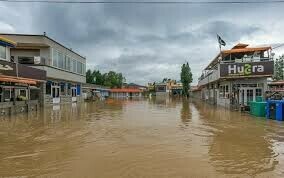
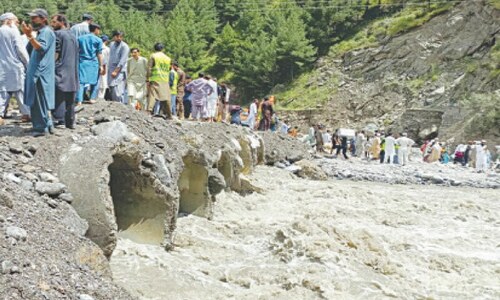
CHARSADDA: Village-level climate adaptation plans have been prepared in the 10 flood-hit union councils with the active participation of target communities to help curtail impact of climate change in Charsadda district.
This was disclosed at a daylong workshop organised by NIDA Pakistan BRAVE Project and CESVI, an Italian humanitarian organisation, here the other day.
NIDA Pakistan project coordinator Zahoor Khan, CESVI climate change specialist Syeda Sara Gilani, programme coordinator Ali Rauf, additional deputy commissioner Shahbaz Khattak, assistant commissioner Riaz Ahmed, chairmen of various union councils, councillors, secretaries and elders participated in the workshop.
NIDA Pakistan project coordinator Zahoor Khan and others said the objective of the workshop was to develop a comprehensive actionable plan to mitigate environmental risks.
They said the results of these successful projects would be presented to District Disaster Management Authority for inclusion in the plan, which will help the Provincial Disaster Management Authority to enhance its district-level climate change adaptation and early action strategies.
Mr Zahoor said in Charsadda district, NIDA Pakistan was implementing the building resilience and addressing vulnerability to emergency preparedness project in collaboration with the ministry of environment.
He said the initiative focused on enhancing the role of community adaptation and resilience to the impacts of climate change. He added that as part of the project, village-level climate adaptation plans had been prepared in 10 flood-hit union councils with the active participation of target communities.
Village council chairmen, councillors and community members discussed the climate change and other environmental changes, noting that climate change had reduced crop production in the district, where most people depended on agriculture for subsistence.
They said heat waves, less rainfall and high temperatures were harmful to standing crops in the region. Similarly, they said there was a risk of drying up of rivers and streams due to climate change.
They suggested that it was necessary to adopt modern methods such as drip irrigation and water harvesting to save water, adding farmers should adopt new agricultural practices according to climate change.
They demanded establishment of flood prevention systems such as the construction of flood dams and desilting/cleaning of rivers and canals.
Published in Dawn, December 15th, 2024