19 killed as country braces for more rain
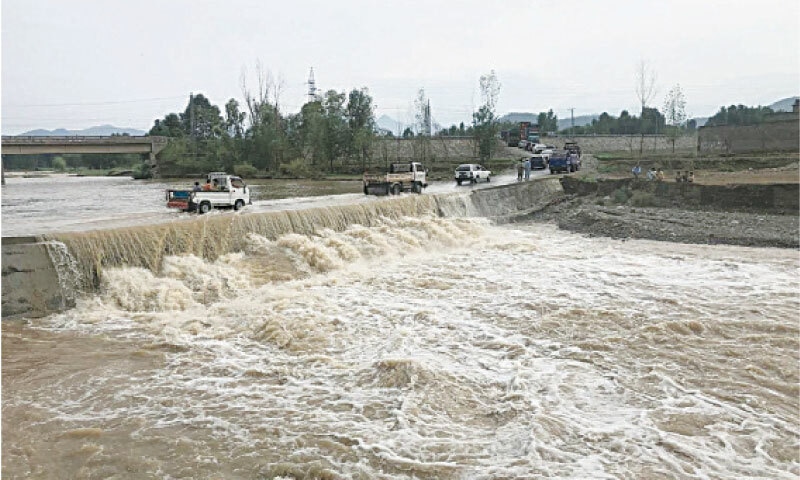

• Seven die, almost two dozen homes damaged in Balochistan; six drown in Islamabad, Pindi
• KP records six deaths in Malakand, Karak, Buner and Manshera
• PM orders authorities to remain on their toes as NEOC forecasts ‘moderate to heavy monsoon rainfall’ till 10th
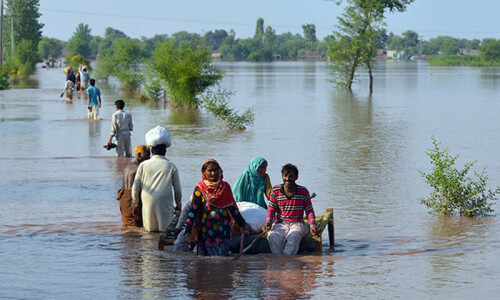
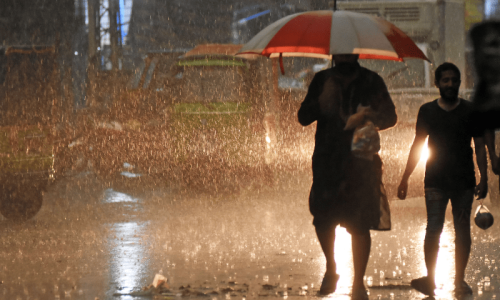
ISLAMABAD: Amid heavy monsoon rains, the National Emergencies Operation Centre (NEOC) on Monday issued an alert for heavy rainfall and a flood-like situation in various parts of the country over the next two days, while 19 people lost their lives in Balochistan, Khyber Pakhtunkhwa and the twin cities of Islamabad and Rawalpindi due to extreme weather.
Moderate to heavy monsoon rainfall is expected till July 10, particularly in the catchment areas of all major rivers, which will likely cause flash flooding in various regions of Pakistan, according to the NEOC. The alert also prompted the prime minister to order the National Disaster Management Authority (NDMA) and other authorities to remain on high alert to deal with potential emergency situations, particularly floods.
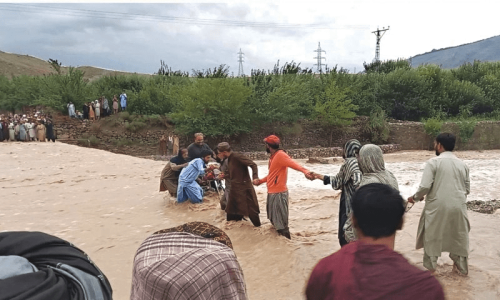
In Balochistan, at least seven people were killed and many others were injured as a result of the fresh monsoon spell over the past 48 hours, the Provincial Disaster Management Authority (PDMA) said. Almost 22 districts of Balochistan have been affected by the rain, and PDMA has already issued an alert of heavy rains and flash floods. The PDMA confirmed seven deaths. It said that 22 houses were damaged while five houses were destroyed.
The areas which were badly affected by the monsoon spell included Awaran, Jhal Magsi, Khuzdar, Musakhail, Qila Saifullah, Barkhan, Kohlu, Loralai, and parts of Zhob and Sherani districts. “At least 22 districts of northern, southern and central Balochistan were affected while the monsoon spell is continuing in these districts,” said the PDMA officials.
“Washuk district bordering Iran was badly affected, where standing crops were washed away and many houses were damaged, which rendered a large number of people homeless,” officials confirmed and added that the rain also damaged solar panels in Loralai and Surab.
At least six people including three children drowned in rain-related incidents in different parts of Rawalpindi and Islamabad, police and emergency services reported.
In Khyber Pakhtunkhwa, six persons lost their lives in Malakand, Buner, Manshera and Karak districts.
PM Shehbaz directed the National Disaster Management Authority, rescue agencies, and administrative authorities to remain on high alert to cope with any potential emergency.
He also expressed concern that the operation of the Tarbela Dam spillways may increase flooding in the lower districts along the Indus River.
Potential riverine flooding
According to NEOC’s forecast, increased water flows are expected in all major rivers, including Kabul, Indus, Jhelum, and Chenab. Currently, low flood levels are being observed at Tarbela, Kalabagh, and Chashma on the Indus River, while Taunsa is also expected to reach the low flood mark. River Chenab is likely to experience low flood levels at Marala and Khanki stations. River Kabul at Nowshera is expected to rise to low flood levels, while Swat and Panjkora Rivers, along with their associated streams and nullahs, may swell due to rainfall in their catchment areas. River Jhelum, along with its tributaries, is expected to experience elevated inflows, resulting in localised flash floods. Inflows at Mangla Dam on River Jhelum are projected to reach the low flood limit.
Hill torrents in Dera Ghazi Khan and Rajanpur districts may once again become active, generating medium to high flows.
In Balochistan, nullahs and seasonal streams in the northeastern districts, including Jhal Magsi, Kachi, Sibi, Qila Saifullah, Zhob, and Musakhail are also likely to experience high flows.
In Gilgit-Baltistan, the Hunza and Shigar rivers may see increased water discharge.
Aamir Yasin in Rawalpindi, Syed Irfan Raza in Islamabad, Saleem Shahid in Quetta, and Manzoor Ali in Peshawar also contributed to this report
Published in Dawn, July 8th, 2025