Auto assemblers warn of market distortion after REEV duty decision
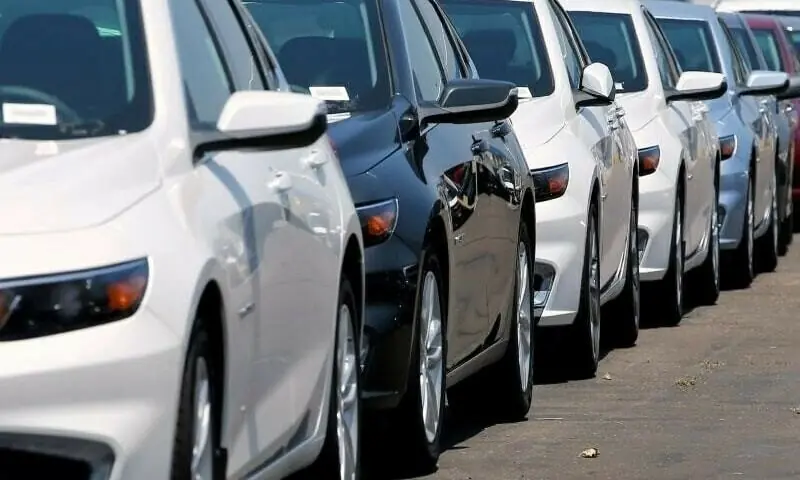

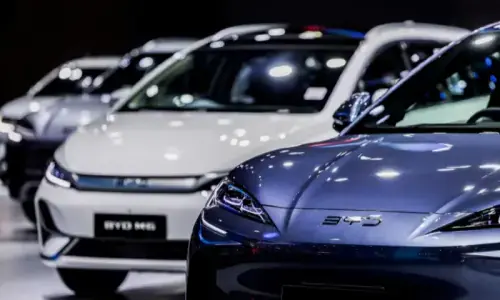
KARACHI: A recent ruling by the Customs Classification Committee classifying range-extended electric vehicles (REEVs) as battery electric vehicles (BEVs) has triggered concerns among local auto assemblers, who argue that the decision overlooks key market realities and will lead to distortion.
The committee classified REEVs, essentially series hybrids, under HS Code 8703.8090, the same category as BEVs, on the basis that propulsion is provided solely by an electric motor, with the onboard internal combustion engine (ICE) functioning as a generator.
However, the Pakistan Automotive Manufacturers Association (PAMA) has termed the matter a case of misdeclaration under the Customs Act, 1969, and raised the issue with the Federal Board of Revenue (FBR).
It noted that the importer declared the vehicle under HS Code 8703.8090, attracting a 25 per cent duty under the Fifth Schedule, whereas the exporter at the port of origin in China declared it under HS Code 8703.6023, which carries a 50pc duty.
Seek review of HS code for range-extended electric vehicles
According to PAMA, HS 8703.8090 applies to pure electric vehicles, while 8703.6023 covers hybrid vehicles.
The association argues that a vehicle equipped with an internal combustion engine, even if used as a generator, cannot be considered a pure electric vehicle and therefore should not qualify for incentives intended for zero-emission vehicles.
PAMA further said the inclusion of an ICE potentially contravenes the National Electric Vehicle Policy, which restricts incentives to all-battery vehicles operating solely on onboard battery charge without any combustion engine.
The association maintained that the dispute involves both classification and fiscal benefits. It argued that if there was no difference in duty, the classification under either of the two mentioned HS codes would be irrelevant.
The customs ruling relied heavily on the source of propulsion. However, industry representatives contend that the presence of an ICE generator — reportedly constituting at least 15pc of the vehicle’s value — makes the product distinct from a customary electric vehicle.
PAMA has called for the ruling to be suspended and reviewed to ensure that fiscal concessions are limited to genuine zero-emission vehicles and that market distortions are avoided.
An assembler pointed out that REEVs typically feature a 45-litre fuel tank, emission levels and fuel efficiency comparable to hybrids when not externally charged. He also noted that exporting countries and UNECE regulations classify REEVs as hybrids.
While the Customs Classification Committee stated that its ruling was confined to tariff classification — and acknowledged that the World Customs Organisation is expected to assign a separate HS code for REEVs by 2028 — the decision to extend BEV-level fiscal incentives rests with the federal government and cabinet.
Currently, completely built-up (CBU) BEVs below 50kWh attract 25pc customs duty and 12.5pc GST, while completely knocked-down (CKD) BEVs benefit from one per cent duty on specific parts, 10pc CKD duty, 25pc duty on its localised parts, one per cent GST and zero federal excise duty — incentives aimed at promoting zero-emission vehicles without combustion engines.
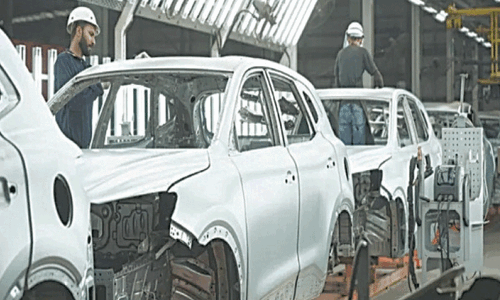
The assembler said industry representatives have warned that extending these same concessions to REEVs could significantly distort the market, trigger a surge in low-duty REEV CBU imports at a fraction of duty, and undermine the economic viability of CKD operations across ICE, HEV, PHEV and BEV segments.
He said this classification issue has emerged at a time when the Auto Policy 2026-31 is being discussed with respect to future tariff structures, sales tax treatment and concessions for hybrid, plug-in hybrid, REEV and battery electric vehicles.
He said automakers are awaiting clarity from the Engineering Development Board (EDB) and the Ministry of Industries and Production, especially as the upcoming policy will require alignment with IMF commitments, federal cabinet approval and consensus among key stakeholders.
Published in Dawn, February 26th, 2026