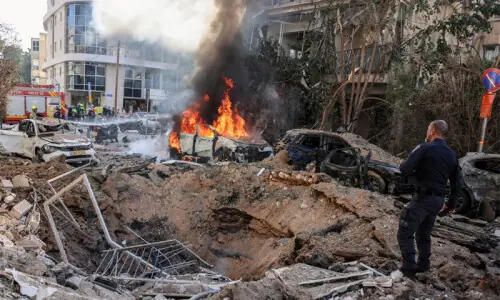
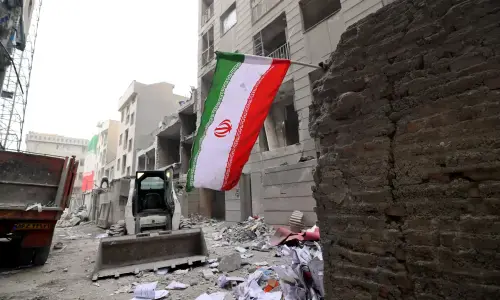
OVER the next few days, the joint US-Israeli aggression against Iran can go either of two ways: nascent attempts at a ceasefire, in which Pakistan is playing a major role, succeed and lead to a long-term settlement. Or, if ominous reports that the US president is buying time to move in more troops and invade Iranian territory are to be believed, the war gets much worse.
In both scenarios, the Trump administration holds the key: it can either choose a sobering climbdown leading to peace, or continue the doomed march towards an even larger war. There is a very slim window for diplomacy, and if this chance is lost, it is unclear when the next may come.
The US has reportedly sent ceasefire demands to Iran via Pakistan, while Turkiye is also engaging in shuttle diplomacy. Iranian officials are said to have termed US demands “unreasonable”.
Pakistan and other regional states realise that if this conflict spirals further out of control, it will create a maelstrom that will consume the entire region, while dealing a huge blow to the global economy. All rational states wish to avoid such a dystopian scenario, except the US and Israel.
The fact is that even close American allies are now voicing their disapproval at the aggression. For example, the German president has termed the war a “breach of international law”. Coming from the leader of a country that goes out of its way for Israel, this is significant. Similarly, the EU’s foreign policy chief has said “this is not Europe’s war”, while the Omani foreign minister has observed that “this war is not of [Iran’s] making”. Unable even to assemble a coalition of the willing to prosecute this illegal war, it is time for President Donald Trump to step back and create conditions conducive to a ceasefire and long-term calm.
If there are negotiations, it is relevant to ask what will be on the agenda. The Iranians want guarantees they will not be attacked again, and compensation for war damage. This demand is reasonable. However, if the US keeps parroting Israeli talking points, and insists on maximalist demands from Tehran, such as an end to its ballistic missile programme, then the talks are unlikely to go far.
For peace, the US and its regional proxy Israel must immediately cease hostilities, and create the right conditions for dialogue. Once matters calm down, states in the neighbourhood — Iran, the Gulf sheikhdoms, Turkiye, Iraq etc — must create a new regional architecture among themselves that promises collective security.
As the past few weeks have shown, the US has only one permanent interest in the region: Israel. It cares little for its Arab allies, which is why these states must forge a new, region-led security order.
Published in Dawn, March 26th, 2026