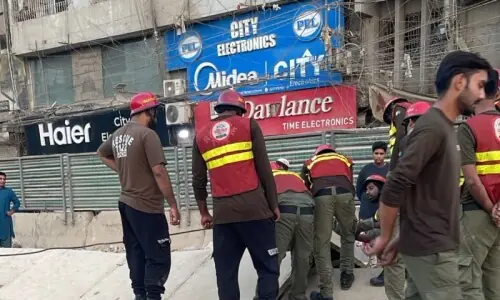
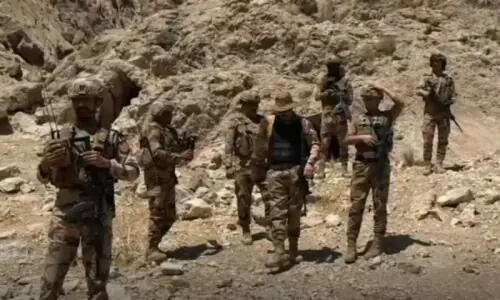
Murad gives nod to Rs30.8bn plan to overhaul emergency services
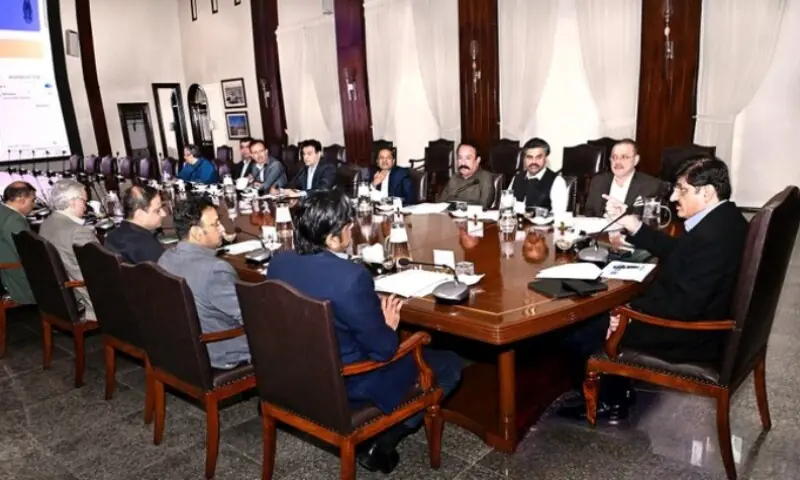

KARACHI: Sindh Chief Minister Syed Murad Ali Shah has approved a Rs30.8 billion comprehensive plan for the reorganisation and modernisation of emergency services across the province, aimed at establishing an integrated, efficient, and responsive system under a unified command.
The plan also includes significant investment in the construction of new fire stations and the establishment of a Rescue-1122 academy to enhance training and institutional capacity.
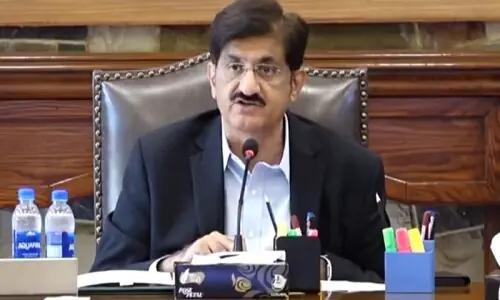
A meeting in this regard, chaired by the CM, was attended by provincial ministers, senior officials and key stakeholders, including Karachi Mayor Murtaza Wahab, Sindh Chief Secretary Asif Hyder Shah, Director General (DG) SBCA Muzamel Halepoto, DG Provincial Disaster Management Authority (PDMA) Salman Shah, and other relevant officers.
The meeting approved a comprehensive financial plan of over Rs30.8bn for the restructuring and strengthening of fire and emergency services. The plan allocates major resources for the procurement of specialised vehicles and equipment, including 100 fire trucks, snorkels, aerial ladders, drones, fire bikes, and all-terrain vehicles, along with modern rescue tools such as thermal imaging cameras, breathing apparatus, and life detection systems.
Procurement of 100 fire tenders, drones and modern rescue equipment approved; five-member body to draft legislation for autonomous rescue authority
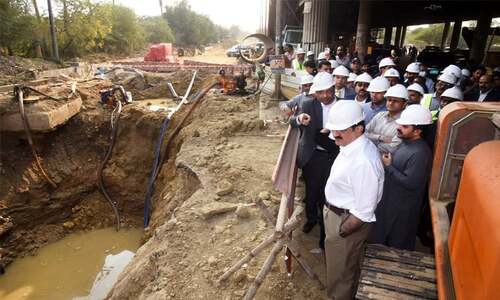
During the briefing, the chief minister was informed that a province-wide fire safety audit had been conducted by 122 teams, covering 3,340 buildings as of April 1, exceeding the initial target of 2,368 buildings.
The audit revealed significant improvement in compliance levels, with the number of substantially compliant buildings raising to 1,328 (43 per cent), while high-risk structures declined from 33pc in February to 22pc.
The CM was further informed that enforcement actions included the sealing of several dangerous buildings and the issuance of over 3,000 notices to ensure compliance with fire safety regulations.
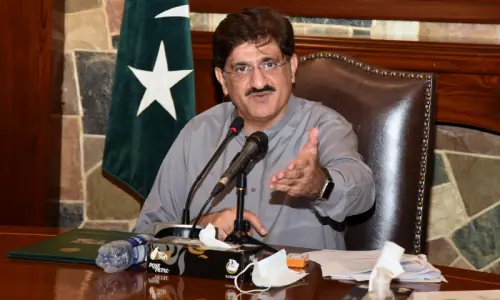
Expressing concern over public safety, CM Shah said, “Protection of human lives and property is the foremost responsibility of the government. We cannot afford gaps in emergency response systems.”
He directed all concerned departments to ensure strict enforcement of fire safety laws, regular inspections, and immediate corrective measures in high-risk buildings. “There should be zero tolerance for negligence when it comes to safety standards,” he emphasised.
The chief minister was briefed on two procurement options, including government-to-government arrangements and international competitive bidding, with the final decision to be taken after consultations with relevant federal authorities.
A high-level committee presented its recommendations for structural reforms, proposing the creation of a unified and autonomous authority for emergency services in Sindh. Under the proposed model, Rescue-1122 and the PDMA will function as operational wings of the new authority.
The proposed restructuring envisions the integration of local government fire services with Rescue-1122 at the operational level, while maintaining centralised control over procurement, training, and policy through the DG of Rescue-1122. The committee also recommended integrating civil defence functions (excluding wartime roles), emergency health services, and compensation mechanisms under a single umbrella to streamline response and coordination during disasters.
Endorsing the recommendations in principle, the chief minister directed that a compre civil defence functions (excluding wartime roles), emergency health services, and compensation mechanisms under a single umbrella to streamline response and coordination during disasters.
Endorsing the recommendations in principle, the chief minister directed that a comprehensive legal framework be prepared to formalise the new structure. He approved the formation of a five-member committee, to be headed by the Sindh Advocate General, to draft the required legislation.
Published in Dawn, April 3rd, 2026