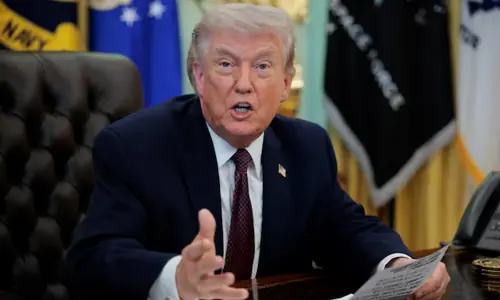
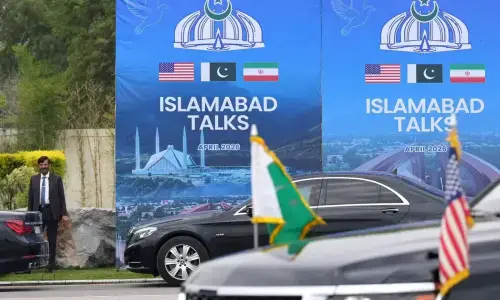
WHILE predictions about the fate of the US-Iran negotiations range from excessively optimistic to doomsday scenarios, there does appear to be some intention on both sides to meet again and try to give peace a chance. Multiple reports in the media on Tuesday said that the two sides could meet again, possibly this week, and perhaps in Pakistan. In fact, President Donald Trump himself indicated as much.
Pakistan and other interlocutors have been working overtime to prevent a collapse in talks, and hopefully these efforts will yield positive results for the entire international community. Foreign Minister Ishaq Dar has been working the phones with various foreign capitals; with the exception of Israel, all major states want the talks to succeed.
According to reports, the main sticking points in the way of an agreement are differences over Iran’s nuclear programme and the freedom of navigation in the Strait of Hormuz. US Vice-President J.D. Vance has said that Iran needs to show “enough flexibility” on the nuclear file to reach a deal. However, many experts familiar with the issue say that Mr Trump’s administration is parroting the Israeli line on Tehran’s atomic programme.
Iran has reportedly agreed to significant concessions, such as suspending nuclear activity for five years, and diluting its uranium. Just before the US attacked Iran in late February, the Omani foreign minister had stated that a deal was within reach. Therefore, if the US wants Iran to show flexibility, it must itself shun rigidity and try to work on what is actually doable.
As for the blockade of the Strait of Hormuz, Mr Trump’s latest gambit is unlikely to soften Iran’s position; instead, it may encourage more hard-line elements within the Iranian establishment to reject the peace process, and return to the battlefield. Furthermore, there is little international support for the US move, with China terming the American blockade “dangerous and irresponsible”.
It bears repeating that it is the US, along with Israel, that is the aggressor in this conflict, so in the attempt to build trust, the onus is on Washington to prove that its intentions are sincere and that it is committed to a genuine peace with Iran. If the US continues to recycle Israeli talking points — specifically about Iran’s nuclear ‘threat’ and its support for ‘terrorism’ — the peace process will not get very far. But if the Americans are ready to turn the page, they need to end the encirclement of Iran, assure the Iranians that they will face no more aggression, and work towards a lasting peace.
The Iranians should similarly reply positively to offers made in good faith. The next few days will be critical, and it is hoped that both sides can return to the table and eventually hammer out a fair deal.
Published in Dawn, April 15th, 2026