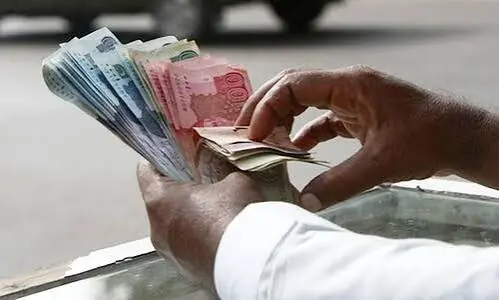
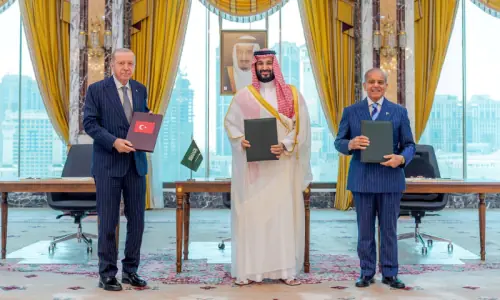
KARACHI: The State Bank of Pakistan (SBP) received the remaining part of the promised $3 billion from Saudi Arabia on Tuesday with an inflow of $1bn.
Earlier this month, the United Arab Emirates withdrew a deposit of $3.5bn with the State Bank, but the amount was not free of cost as interest on the loan was reportedly as high as six per cent.
Financial experts and researchers are of the view that the changing geopolitical realities arising from the Gulf war might bring more problems for countries like Pakistan. The UAE’s sudden decision to withdraw its support of $3.5bn could have put Pakistan in trouble, but Saudi Arabia stepped in with a deposit of $3bn to fill the gap.
Final $1bn inflow shores up reserves after UAE withdrawal
Pakistan received $2bn on April 17, while the country has already paid $2bn to UAE and another $1.4bn against the maturity of Eurobonds.
Another $1bn is expected to be paid to the UAE on Thursday (April 23). The government had already paid $500 million to that country before the $2bn payment.
Eurobond in demand
Meanwhile, the country managed to enter the international financial market with a plan to raise $500m through Eurobonds, but it used the greenshoe option to raise the total to $750m as the demand for the product was high.
Financial experts said, however, the amount raised was costly and for a short term of only three years.
State Bank Governor Jameel Ahmed said confidently at a meeting of top bankers and rating agencies in Washington that the target of $18bn reserves would be achieved.
Bankers in the currency market said the State Bank had been buying dollars on a large scale, while a higher inflow of remittances has provided space for more purchase.
Since the clouds of war are still looming large over the region, Pakistan is facing many uncertainties like higher prices of imported oil, a big decline in exports and curbs on imports to save dollars.
Inflation is already high and may climb further if the war drags on, according to financial experts.
Pakistan is willing to enter the Chinese financial market with Panda bonds, but has not been able to finalise a plan for the last three years. Recently, the government has once again reiterated its plan to launch Panda bonds.
“Due to war in the region, risk is high for Pakistan. This means the country will have to offer higher returns on Panda bonds to make it a success,” said a banker. He said such costly borrowing would be a burden for the country due to higher debt servicing.
The country will have to pay a total of $25bn in FY26 as debt servicing for external loans and liabilities. The government is bound to the IMF’s conditions for future inflows from international donors. The IMF’s green signal is important as it also affects other sources from which Pakistan may borrow.
Published in Dawn, April 22nd, 2026