

Pentagon chief spars with lawmakers over Iran war
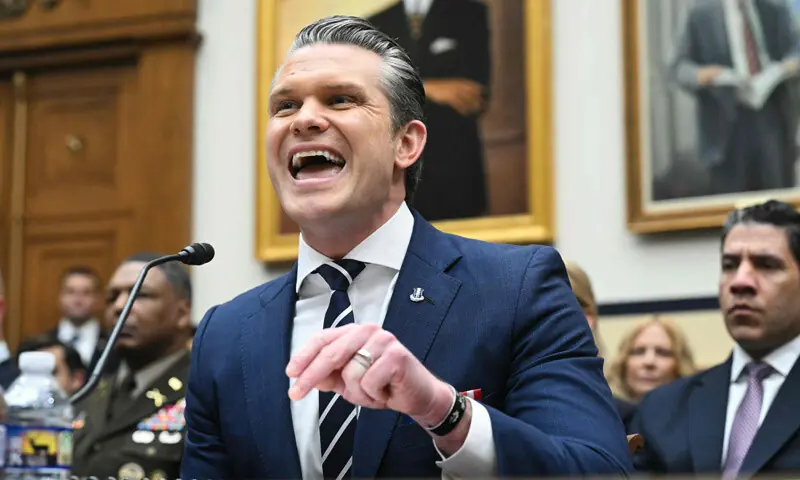

WASHINGTON: US Defence Secretary Pete Hegseth repeatedly clashed with Democratic lawmakers over the Iran conflict on Wednesday, in his first testimony to Congress since President Donald Trump launched the war more than two months ago.
Appearing before the House Armed Services Committee, Hegseth quickly struck a combative tone, saying in his opening remarks that the main challenge at this point is the “defeatist words of Democrats and some Republicans.”
Representative Adam Smith — the committee’s top Democrat — took aim at the regional fallout from the war and its toll on both US troops as well as civilians, saying he wanted answers on where the conflict is going and “the plan to achieve our objectives.”
He later asked Hegseth how the “lethal, kinetic action” of the war could be turned into an improvement when it comes to Iran’s nuclear program, which Washington is seeking to eliminate. Hegseth responded by taking aim at the “very bad” nuclear agreement that Trump scrapped during his first term in office.
John Garamendi, another Democrat, accused Hegseth of “lying to the American public about this war from day one” describing what is happening in the Middle East as a “geopolitical calamity, a strategic blunder, resulting in worldwide economic crisis.”
“During the 60 days of Trump’s Iran war, critical munitions have been expended at an alarming rate, depleting magazine levels below what is thought necessary to hold China at bay,” said Garamendi, also describing the conflict as a “quagmire.”
Hegseth pushed back, asking Garamendi “who are you cheering for here?” and saying that calling the war a quagmire was “handing propaganda to our enemies.”
Democratic Representative Seth Moulton asked Hegseth if he advised Trump to attack Iran — a question Hegseth declined to answer, though he later said he thought doing so was “a good idea.”
Asked by Moulton if he had considered the risk of Iran closing the vital Strait of Hormuz if it was attacked, Hegseth said the Pentagon “looked at all aspects of this risk.”
Hegseth was also pressed on the cost of the conflict, which he said was estimated at less than $25 billion so far.
The Pentagon chief then asked the committee: “What is it worth to ensure that Iran never gets a nuclear weapon?”
Published in Dawn, April 30th, 2026

























