Textile industry projects 7.2m cotton bales import to meet shortfall

LAHORE: The textile industry will likely be forced to import around 7.2 million bales of cotton during the 2026-27 cotton year to meet domestic demand, as the country’s cotton production is expected to decline further despite rising consumption requirements, industry experts warned on Sunday.
The latest report of the United States Department of Agriculture (USDA) has said that Pakistan’s cotton production during the upcoming season is estimated at 6.94m bales of 160 kilograms each, down by 272,000 bales compared to last year. Meanwhile, domestic consumption is projected at 14.15m bales, though actual demand would largely depend on future government policies and the operational capacity of the textile sector.
According to the USDA report, China is expected to remain the world’s largest cotton producer this year with an estimated output of 45.6m bales, followed by India with 32.6m bales, Brazil with 23.8m bales and the United States with 18m bales.
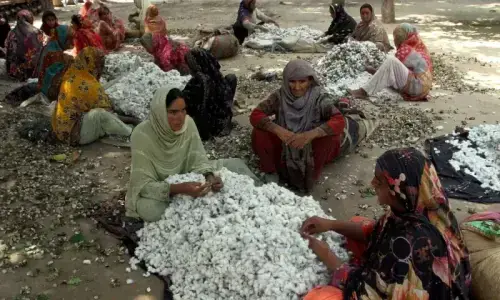
The new cotton ginning season has started gradually in Pakistan, with six ginning factories becoming operational in Punjab during the past week, while two ginning factories in Sindh had already started operations before Eidul Azha. However, the industry expects the full-fledged cotton ginning season to begin after Eid.
Experts want ‘business-friendly’ budget to promote the sector and ease inflation, create job opportunities
Prices in the domestic cotton market remained stable, with phutti (seed cotton) selling at around Rs11,500 per 40kgs and cotton at approximately Rs22,500 per maund. However, a clearer trend regarding price increases or declines is expected to emerge after Eid once market arrivals improve.
Cotton Ginners Forum Chairman Ihsanul Haq has expressed serious concern over what he termed a record 84pc sales tax burden on the cotton ginning sector. He said the heavy taxation had pushed many cotton ginners and oil mill owners towards undocumented business practices, causing losses to the national exchequer while also making official cotton production statistics increasingly controversial.
He warned that repeated reports in international markets about Pakistan’s continuously declining cotton production were creating a negative impression. He urged the federal government to respond positively to the Pakistan Cotton Ginners Association’s demands in the upcoming federal budget by abolishing sales tax on cottonseed, cottonseed oil and oilcake.
According to him, such measures could significantly boost cotton cultivation, help the country save billions of dollars spent annually on cotton and edible oil imports, and reduce prices of ghee and cooking oil, thereby providing relief to consumers. He added that the move could also help curb undocumented business activities in the sector.
The textile industry was currently facing one of the worst economic crises in its history due to exceptionally high electricity, gas, markup and taxation rates compared to competing countries.
Leading industrialists are urging the government to provide maximum relief to textile and other industries in the upcoming budget, particularly through the abolition of super tax, so that industries could resume full-scale operations and strengthen the national economy.
Haq also suggested that instead of allocating hundreds of billions of rupees to welfare and charity programmes such as the Benazir Income Support Programme (BISP) and various provincial relief funds, the government should divert greater resources towards industrial revival and economic relief measures.
According to him, promoting business activity rather than dependence on charity would help reduce inflation, create large-scale employment opportunities and put the country back on the path of economic growth.
Published in Dawn, May 18th, 2026