AUG 11 occupies a special place in our history because it was on this day in 1947 that Quaid-i-Azam Mohammad Ali Jinnah set out what citizenship in the new state ought to mean. Addressing the Constituent Assembly, he spoke of a country in which people were free to go to their temples, mosques or other places of worship, and where religion, caste or creed would not determine their standing before the state.
He insisted that citizens should enjoy equal rights, privileges and obligations, and that discrimination between communities had no place in the order Pakistan was attempting to build. These remarks formed part of a wider vision of government based on law, impartiality, protection of life and property, and the safeguarding of religious belief.
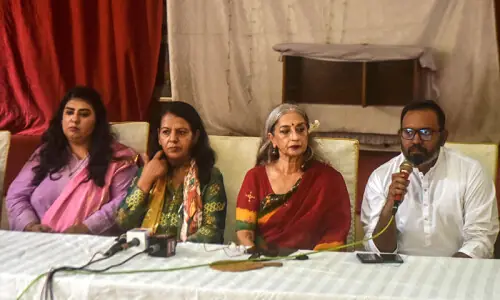
It is fitting, then, that minority rights activists will gather outside Mazar-i-Quaid in Karachi today to recall that promise and demand that it be honoured. The Minority Rights March has put forward 11 demands, including stronger safeguards against forced conversions, protection from the misuse of blasphemy laws, greater political representation, removal of discriminatory material from textbooks, protection of minority properties and places of worship, and expanded access to education and employment.
Organisers have also called for constitutional amendments allowing non-Muslim citizens to qualify for the offices of president and prime minister. Whether every demand commands consensus is a matter for democratic debate. But the principle from which they proceed — that citizenship should not be graded according to faith — should not be controversial in a republic that continues to invoke Jinnah as its founding authority. The delay in a written NOC for the march deserves attention. Peaceful assembly is a right, not a favour.
The gap between Jinnah’s principle of equal citizenship and present realities cannot be ignored. It is especially troubling because these protections were articulated at the birth of Pakistan itself. Religious minorities continue to face mob violence, attacks on their places of worship, forced conversions and social and economic exclusion.
Laws intended to protect religion have at times been weaponised through false accusations, with consequences extending far beyond the courtroom. Even where the state guarantees equality, social prejudice and institutional barriers make that guarantee fragile in practice. National Minority Rights Day must be more than a ceremonial observance.
It should prompt the state to examine where law, policy and public culture continue to fall short of the standard articulated on Aug 11, 1947. Jinnah did not ask minorities to be grateful for protection; he described equal citizenship as a fundamental principle. Pakistan cannot honour that principle through speeches alone. It will honour it when every citizen, regardless of faith, can claim the same dignity, security and political belonging.
Published in Dawn, August 11th, 2026