Nutrition crisis stunts Pakistan’s development dreams

• Over four in 10 kids under five suffer from stunting, DawnMedia moot told
• Ahsan terms child stunting ‘national security threat’
• Planning Commission to take institutional ownership of nutrition, early childhood development
• Pakistan losing $17bn annually to consequences of malnutrition, says Dawn CEO
• Experts call for coordinated action across health, education, agriculture, social safety
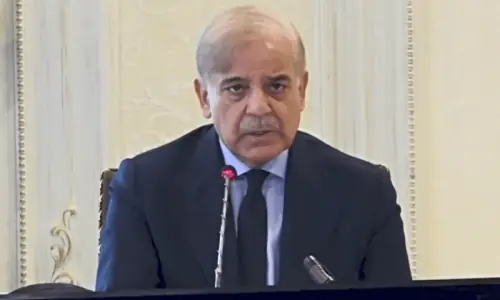
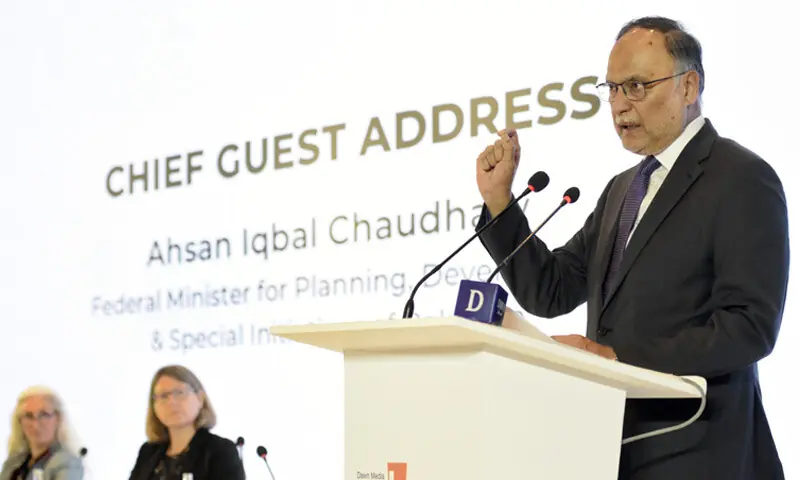
ISLAMABAD: Planning Minister Ahsan Iqbal on Wednesday warned that Pakistan’s persistently high level of childhood stunting had become a “national security threat”, stressing that a country where around 40 per cent of children were physically weak and cognitively compromised could not afford to treat malnutrition merely as a health issue.
Speaking at the opening of the two-day “Act for Nutrition” conference organised by DawnMedia Group, the minister said the crisis should be treated as a top national priority.
Experts at the conference warned that more than four in 10 children under five were stunted and malnutrition was costing Pakistan close to $17 billion annually.
Mr Iqbal said stunting was no longer simply a statistic in a health-sector report but a national development, economic and human capital challenge.
“When around four out of every 10 Pakistani children under the age of five suffer from stunting, we are talking about millions of individual lives whose potential may be compromised,” he said.
He said affected children could struggle physically, suffer impaired cognitive development, enter school less prepared to learn and ultimately have lower educational attainment and lifetime productivity.
When multiplied across millions of children, the problem affected Pakistan’s economic competitiveness, he added.
The minister said Pakistan could not aspire to build a knowledge-based and technology-driven economy while millions of children started life at a disadvantage.
“Investment in nutrition is not charity, it is economic policy,” he said, adding that early childhood development was a productivity issue and central to nation-building.
Mr Iqbal also announced that the Planning Ministry was taking “institutional ownership” of nutrition and early childhood development as a core human capital priority during the current financial year.
He said the Planning Commission would work to integrate nutrition and early childhood development more firmly into national planning and public investment, using instruments including the Public Sector Development Programme, project appraisal, inter-ministerial coordination, data and monitoring.
He said the government’s approach would focus on outcomes rather than merely measuring allocations, schemes or the number of beneficiaries. The questions that mattered, he said, included whether fewer children were becoming stunted, mothers were better nourished and children were entering school healthy and ready to learn.
Mr Iqbal said the first 1,000 days were among the most consequential periods of human development, during which the foundations of physical growth, brain development and future learning were laid.
He said intervention could not begin only when a child entered school but had to start with the nutrition of adolescent girls and mothers and continue through pregnancy, breastfeeding, immunisation, clean water, sanitation and early learning.
He also linked Pakistan’s poor social indicators to political instability, stressing that governments operating under uncertainty tended to focus on projects that produced visible results within a short period instead of long-term investments in health, education and human development.
Mr Iqbal said Pakistan’s literacy rate stood at around 63pc and about 25 million children remained out of school, describing these as serious national challenges.
He said he had been shown a presentation indicating that Pakistan’s stunting rate had remained around 40pc for roughly four decades, while countries that had once been in a comparable position had made progress.
“It is about time that we also make a commitment” to eliminate this mark on Pakistan’s development path, he said.
‘National emergency’
Dawn CEO Nazafreen Saigol Lakhani described the situation as a “national emergency and a profound failure of our collective priorities”, noting that four out of every 10 children under five were stunted, with their physical growth and cognitive development potentially permanently compromised.
She said Pakistan lost close to $17bn annually to the consequences of malnutrition, more than what it typically borrowed from the International Monetary Fund in a given year.
“We spend enormous energy negotiating that borrowing,” she said, adding that comparatively little attention was paid to an economic loss taking place quietly inside households.
Ms Lakhani said nutrition was not an issue for the health ministry alone, as it sat at the intersection of health, agriculture, water, education, social protection, the economy and, “ultimately, our national security”.
She said countries such as Bangladesh, Peru and Rwanda had shown that stunting could be substantially reduced within a generation when governments treated it as a collective national priority.
World Health Organisation Director General Tedros Adhanom Ghebreyesus, in a recorded message, said malnutrition remained one of the greatest barriers to health, development and opportunity and that the problem was not a lack of knowledge but a lack of action. He said governments, academia, civil society and the private sector all had a role to play.
World Bank Lead Nutrition Specialist Abigail Perry said malnutrition was a fundamental barrier to the health and prosperity of individuals, communities and nations. “When a child’s development suffers early in life, the effects can last a lifetime,” she said, adding that the challenge for Pakistan was how to act at the scale, speed and quality required.
Acting UN Resident Coordinator in Pakistan Pernille Ironside said communities should be placed at the centre of the response, particularly through frontline workers and community-based platforms.
She said nutrition policies should also be built into preparedness for climate disasters, economic shocks and displacement rather than activated only after a crisis.
‘First 1,000 days crucial’
BISP Director General Dr Asim Ijaz said the first 1,000 days provided a crucial window for child development during which irreversible damage could occur. He said the Benazir Nashonuma Programme had added a nutrition and health component to BISP’s existing social protection platform.
Dr Hana Mahmood, director of the International Research Force, said nutritional requirements were particularly high during the first 1,000 days as the immune system and major organs developed.
“During the first two years of life, 80pc of a child’s brain develops,” she said and noted that Pakistan had one of the highest child-under-five mortality rates, a majority of which was contributed by malnutrition.
Other experts called for greater attention to adolescent girls and maternal nutrition, better monitoring of nutritional deficiencies during pregnancy and improved access to affordable healthy food.
On financing, Gates Foundation official Dr Ammar Malik said that according to World Bank statistics, for every dollar a government invested in nutrition, it could get up to $23 back in the form of economic benefits.
He said another issue was that nutrition was seen as a standalone topic in such discussions, instead of framing it as a gross domestic product statistic.
“If I were to say to you that Pakistan is losing 3pc of its GDP because of lack of investment in nutrition, that is a much stronger argument for economic policymakers than it is to talk about nutrition,” he said.
The discussions repeatedly returned to the need for coordination. Experts said malnutrition was produced by a combination of poor diets, inadequate healthcare, weak water and sanitation services, poverty and other factors, making a multisectoral response essential.
Published in Dawn, September 3rd, 2026