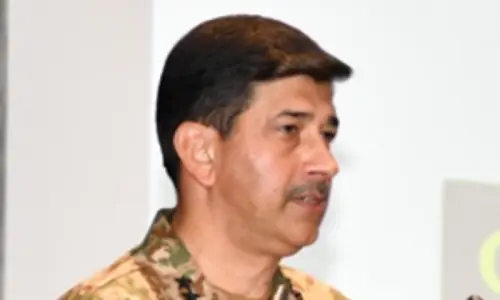
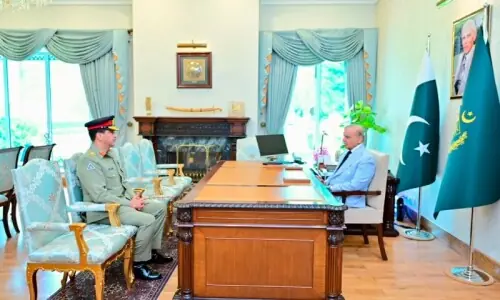
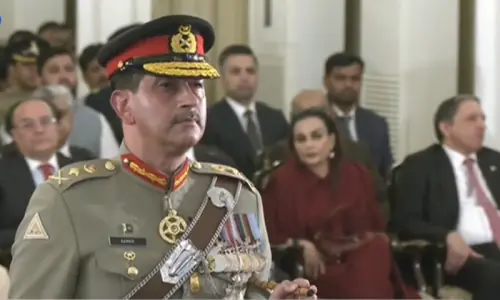
ISLAMABAD: The government, in a surprise move on Friday, transferred Inter-Services Intelligence (ISI) Director General (C) Major General Faisal Naseer and appointed him national coordinator of the National Counter-Terrorism Authority (Nacta).
The DG (C) post is often mistakenly described as heading ISI’s counter-intelligence wing. The office actually heads the agency’s Internal Wing, which deals with domestic security and other matters and, because of the nature of the assignment, frequently engages with the country’s principal power centres.
Within the ISI, DG (C) is considered virtually the second most important position after that of the ISI director general.
Maj Gen Naseer’s transfer is being seen as particularly significant because it comes ahead of the upcoming promotions in the army. An officer from the Corps of Military Intelligence, he was considered a strong candidate for elevation to the rank of lieutenant general.
He served as DG (C) from 2022, shortly after his promotion to the rank of major general, and remained in the position through a politically turbulent period.
Although there have been exceptions over the years, a transfer to a non-military assignment may affect an officer’s career progression, hence the surprise among many observers of military affairs.
Nacta, established in 2009 and subsequently given statutory backing under the Nacta Act of 2013, was conceived as the country’s central civilian body for coordinating counter-terrorism and counter-extremism policies among federal and provincial agencies.
In practice, however, the authority has never fully evolved into the command and coordination body envisaged under the law and has largely remained a policy secretariat with limited capacity to enforce decisions across the country’s sprawling security and law enforcement apparatus.
The authority has also seen frequent changes at the top, with more than a dozen National Coordinators since its inception, most of them drawn from the police service.
Maj Gen Naseer’s appointment therefore marks a departure from the usual practice and could potentially signal an attempt to give greater weight to an institution that has long struggled to establish itself as the central coordinating mechanism for the fight against terrorism and violent extremism.
The government did not immediately explain the rationale for the change.