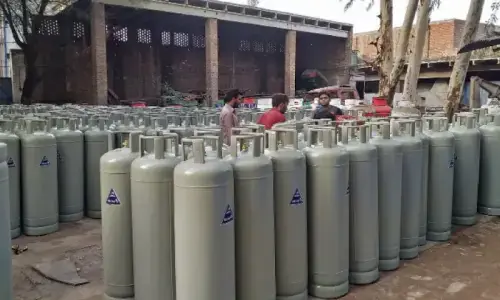
Gas shortage is increasing every day, sparking a tough fight between those who have access to natural gas and those striving for it.
Apart from constitutional rights to contractual obligations and broader economic challenges, the contending arguments stretch as far as to basic human necessities to luxuries and to powers of the political, and judicial organs of the state.
It has turned into one of the top political bribes, with it being not only a fuel of choice for cooking, heating and transport, but also industry and fertiliser. But have all the powerful stakeholders considered what far reaching ramifications the latest crisis of gas shortfall is set to unleash? Not in the public knowledge, at least.
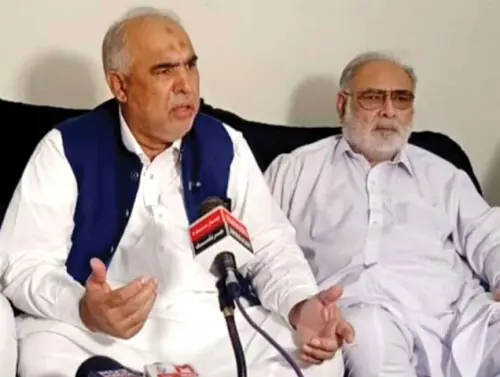
Such is the political cost that even petroleum minister Shahid Khaqan Abbasi, who should be guiding the nation on its energy options, is reluctant to take a position. Asked if, in his opinion, it was the right policy to provide natural gas for cooking, heating and transportation from the national economic view point at a recent news conference, he said he could not comment publicly and may have different views privately.
His boss Nawaz Sharif would not miss an opportunity to direct that there should be no gas shortage to households at any cost. The fact that this directive remains a pipedream this winter is a different story.
This is despite the fact that less than 30 million people out of the 180 million population is, on paper, connected to piped gas. The rising number of residential consumers is only adding to the cost of gas companies, which are struggling to contain system losses. Their compatriots in villages and outside the gas transmission system continue to bear 8-10 times higher cost of fuel.
But the system is not working for more than 40 per cent of permanent households in Punjab’s cities, which do not have access to natural gas for cooking nowadays. What needs to be clearly understood and publicly acknowledged at the outset is the quantum of shortage.
The total shortage in the Sui Northern Gas Pipeline’s network is about 1.5 billion cubic feet per day (BCFD), against maximum supplies of about 1.7 BCFD. Another 0.5 BCFD shortage exists in the Sui Southern Gas Company’s system. After including direct supplies from dedicated lines and contractual commitments, the total shortfall in the country goes beyond 2.3 BCFD, representing almost 50 per cent shortfall in constrained demand.
With such a wide gap in demand and supply, fiddling around with limited gas resources has not been successful. The policy of supplying gas to domestic consumers as a top priority — on a dispatch order approved repeatedly by the Economic Coordination Committee (ECC) of the cabinet — has practically failed.
The priority list of residential, commercial, power, fertiliser, industrial and captive power, and CNG and cement sectors, in that order, is in total turmoil.
A move by the government to discourage gas consumption in the non-productive transport sector by placing it on the last leg of priority has met a blow because it was done without proper homework and consultative process. On top of that, the Islamabad High Court has ordered restoration of gas supply to CNG stations for three days a week. This has compounded problems for household consumers.
The power sector, which is on top of the approved gas load management policy list after domestic and commercial sectors, is no more on the scene. In fact, gas supply from the power sector has been diverted to industrial captive power plants (CPPs), even though it was on the lower ladder of the policy.
And this is despite the fact that the cost of power generation from gas-fired power plants, at about Rs4-5 per unit, could drastically bring down the overall power cost from Rs22 per unit produced by furnace oil-based plants.
The industrial sector is not only politically influential and well-connected, but also important from a national production stand point and resultant export earnings and job creation. On top of that, fresh opportunity arising out of the European Union’s GSP Plus scheme has been a supporting factor.
The agriculture sector, again, is a priority area from a national food security perspective. The difference between imported fertiliser and domestic fertiliser produced from subsidised domestic natural gas is too big and a foreign exchange-intensive option. But its merit-based utilisation remains a question mark.
Prime Minister Nawaz Sharif needs to come out in public and guide the nation on gas usage. When more than half of residential consumers are unable to get gas for cooking, and the number of such consumers keeps on increasing, there should be a political decision to divert gas to the manufacturing sector, with proper pricing commensurate with alternate fuels, to support industrial output and job creation. A complete moratorium on further household gasification is a must.
There is no point in wasting a resource that can alternatively play wonders in job creation, export earnings, lower electricity costs and food security. The Constitution protects the right to business, and hence the CNG sector should be phased out through mutual understanding and compensation for the larger good.