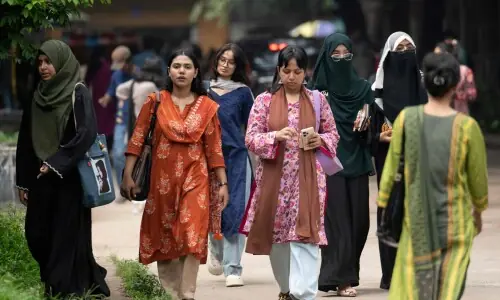
PATNA: Hundreds of thousands of people lined up at polling stations in the east Indian state of Bihar on Monday for elections being seen as a referendum of Indian Prime Minister Narendra Modi's popularity.
The elections are being held in 49 constituencies in the first of five phases of voting for the state's legislative assembly.
More than 13.5 million voters will cast their votes at nearly 13,000 highly guarded polling stations across the state in the first phase.
Modi's Bharatiya Janata Party (BJP) is facing a "grand coalition" of two former chief ministers, including the incumbent, Nitish Kumar.
The outcome in Bihar, one of India's poorest states, is being seen as a test for Modi, who, as his party's chief campaigner, addressed several election rallies and political meetings across the state.
Analysts say a victory for Modi's party would signal approval of its attempts to push its brand of Hindu right-wing politics.

The last phase of voting is November 5 and results will be announced November 8.
Five of the 10 state districts where the polling is taking place are facing threats from Maoist rebels.
Security was tight Monday, with thousands of paramilitary soldiers deployed to maintain order outside the polling stations.
For the first time, authorities used unmanned aerial vehicles, or drones, to monitor far-flung polling stations.
Early polling was peaceful, R. Lakshmanan, a state electoral officer, said in Bihar's capital, Patna.

The rebels, who say they are inspired by Chinese revolutionary leader Mao Zedong, have been fighting for more than four decades in central and eastern India, staging hit-and-run attacks against authorities as they demand a greater share of wealth from the area's natural resources and more jobs for farmers and the poor.
They often attack security forces and government officials and disrupt elections, which they see as an attempt to perpetuate the existing inequalities.