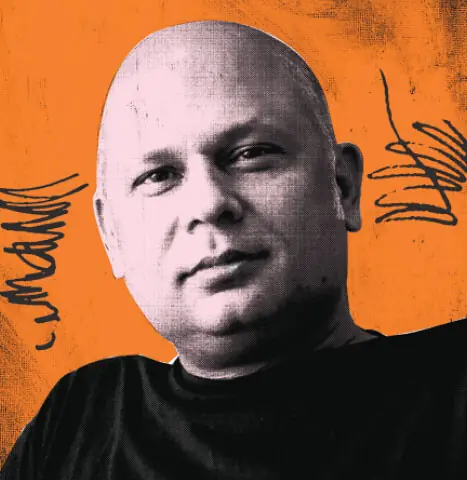
Soon after I had witnessed people dying and killing for a new ethnicity being forged, a new nationalism being born, a new partisan association being entrenched into the body politic of Pakistan, and a diverse community being imagined afresh as a homogenous group of people, my teacher, Professor Tim Allen, introduced me to the works of Benedict Anderson. Imagined Communities by Anderson was unputdownable, as they say, and provided that much-needed theoretical framework to dispassionately evaluate what we witnessed in the late 1980s and early 1990s in urban Sindh — the emergence of the Mohajir ethnic identity and its political expression in the shape of the MQM.
Anderson’s superior articulation of how the virtual becomes real when nations and nationalities are created can also be employed to understand the larger South Asian political experience of the last century. In the 1930s and 1940s, our previous generations had witnessed the rise of modern Indian nationalism, Muslim separatist nationalism and Hindu revivalist nationalism in tandem with each other. This was followed by a number of nationalist and/or secessionist movements waged within the South Asian states freed from colonial rule in 1947.
In addition to his magnum opus, Anderson has to his credit a number of other significant works of scholarship drawing upon the experience of people across continents. But he has a particular focus on Southeast Asia including Thailand and Philippines. He was not simply an outstanding scholar in politics and historical science who would remain desk-bound and keep himself to pontificating in his classroom at Cornell University after some fieldwork. He closely associated himself with movements for civil and political freedoms and social and economic justice. Indonesia with its democratic struggle and communist movements, its writers and chroniclers of that political experience, the activists who sacrificed their lives for freedom and dignity, and common people and their hopes, were matters Anderson remained passionate about until the time he passed away in the same country on Dec 13, 2015.
Anderson was fully cognisant of the trajectory of Western imperialism and the chart of its resistance in Africa, Asia and Latin America. He understood and explained the intellectual contradictions within international academia. He had an unmatched grasp over dissecting the machinations of power within and between the developed and developing countries, and critiqued the causes of misery and wretchedness in contemporary human societies.
From Claude Levi-Strauss to Benedict Anderson, Eric Hobsbawm to Mahmood Mamdani, Margaret Mead to Naila Kabeer, and so many others like them, the last century produced many powerful minds that drew upon the experience and knowledge of their philosophical predecessors and collective human civilisation over centuries. They helped inspire those intellectual and social movements that worked towards developing a broad consensus against racism and misogyny. Even though the inherent clash between monopolistic capitalism and social justice continued, the intellectual and political constituency against chauvinistic nationalism and economic oppression continued to be strengthened. We saw an end to apartheid in South Africa, the appearance of formidable women on the world stage like never before, the first African-American man elected as president of the United States and a near-universal end to certain diseases.
But well into the second decade of the 21st century, when we witness the enthused revival and increased acceptance of bigotry and prejudice in popular imagination, we also see the weakening of the broad consensus against racism and misogyny. When humanity seems to have regressed, it is a good idea to pick up Anderson’s memoir A Life Beyond Boundaries, which he ends by saying: “Hence in the spirit of Walt Kelly and Karl Marx in a good mood, I suggest the following slogan for young scholars: Frogs in their fight for emancipation will only lose by crouching in their murky coconut half-shells. Frogs of the world unite!”
The writer is a poet and essayist based in Islamabad.
His collection of essays, Crimson Papers: Reflections on
Struggle, Suffering, and Creativity in Pakistan, was recently
published by Oxford University Press
Published in Dawn, Books & Authors, April 30th, 2017