WASHINGTON: Pakistan is trying to restart the quadrilateral peace process for ending the Afghan war and has asked the group members to meet in Muscat, Oman, on Oct 16.
Afghanistan, the United States, China and Pakistan are members of the group.
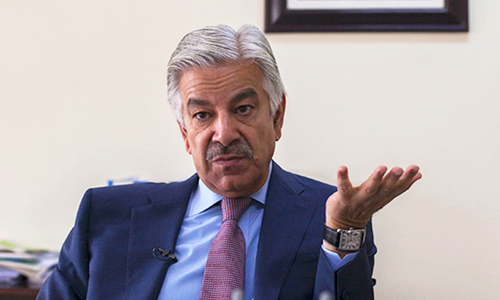
Foreign Minister Khawaja Asif told VOA Urdu in Washington last week that Pakistan would play a leading role in this quadrilateral session, aimed at bringing the Afghan Taliban to the negotiating table.
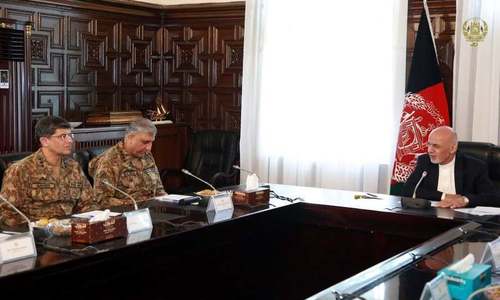
Also read: After army chief's visit, Afghan president considers trip to Pakistan
The Quadrilateral Cooperation Group first met in January 2016 and has had five sessions so far, the last being held in May 2016 in Murree.
The process was plagued by problems from the beginning. First the Taliban refused to join it unless given the same status as the Afghan government. When they were persuaded to attend, relations between Kabul and Islamabad strained.
The first four meetings, however, did show some progress. China’s participation was particularly encouraging as both Pakistan and Afghanistan set aside their acrimony to welcome China. Pakistan hoped that China’s involvement would answer its main concern, India’s growing influence in Afghanistan. The Afghan government hoped that China’s clout with Pakistan could have helped persuade Islamabad to improve its ties with Kabul.
The international community too welcomed the quadrilateral talks because all four countries are seen as crucial to ensuring the success of any peace talks on Afghanistan.
But during the fifth session, some officials in Kabul leaked news to the media saying that the reclusive Taliban leader Mullah Omar had died in Karachi in 2013 but Pakistan was hiding this news because it feared losing its influence on the Taliban.
The revelation derailed the talks as officials from each of the four governments opted to return to their capitals for consultations. On May 21, 2016, Mullah Omar’s successor, Mullah Mansour was also killed in a US drone strike in Balochistan, which further delayed the peace process.
Since then, Pakistan has made several attempts to restart the talks but none of the four parties seemed very keen on returning to negotiations.
In Afghanistan, the Taliban increased their attacks on both US and Afghan government targets. And in the United States, the new Trump administration concluded that the best way is to force the Taliban to talk.
At a recent news briefing in Washington, US State Department’s spokesperson Heather Nauert expressed doubts about the success of these peace efforts when she questioned the efficacy of the Taliban’s non-official diplomatic post in Qatar.
“We’ve been now in that war for 16 years” but “they have not been able to come to any kind of peace and reconciliation, so just by having folks sit around in Qatar, in probably a pretty cushy life there, has not demonstrated, has not brought to the table any kind of significant peace efforts,” she said.
And during his three-day visit to Washington last week, the Pakistani foreign minister acknowledged that Pakistan too was losing its influence on the Taliban.
“At least for our influence on Taliban today, there is mistrust,” Mr Asif told VOA Urdu, adding that he believes Russia “today has more influence on the Taliban than Pakistan does”.
Despite these concerns, all four members of this group want some peace in Afghanistan and are likely to participate in the Muscat meeting.
But instead of sending their senior officials, as they did to the last five meetings, they are likely to send mid-level officials to prepare for future talks.
Published in Dawn, October 10th, 2017