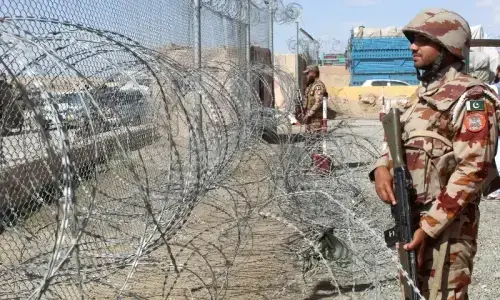
WASHINGTON: Civilian authorities in Pakistan have generally maintained effective control over the security forces, says the US State Department’s annual report on human rights.
The report, released in Washington on Friday, also notes that “orderly transitions in the military [chief of the army staff] and the judiciary [Supreme Court chief justice] solidified the democratic transition” in Pakistan.
In a brief introduction to the political situation, the State Department’s country report on Pakistan states that in May 2013 the PML-N won a majority of seats in parliamentary elections, and Nawaz Sharif became prime minister for the third time.
It also refers to the July 28, 2017 decision of the Supreme Court, which disqualified Mr Sharif from office over corruption allegations but points out that the country’s parliament, and not an undemocratic authority, elected the new prime minister, Shahid Khaqan Abbasi, on Aug 1.
In an assessment of the 2013 general elections, the State Department notes that “the government permitted all existing political parties to contest the elections, although several smaller parties boycotted the polling”.
The State Department shares the observation of international election observers, noting that they generally considered the elections a success, despite terrorist violence and some procedural problems.
In Balochistan, however, there were reports that security agencies and separatist groups harassed local political organisations, such as the Balochistan National Party and the Baloch Students Organisation, it adds.
The report states that while no laws prevent women from voting, cultural and traditional barriers in tribal and rural areas impeded some women from voting.
“Women participated actively as political party members, but they were not always successful in securing leadership positions within parties, with the exception of women’s wings. Women served in the federal cabinet,” the report notes.
It also refers to the comprehensive Elections Act 2017, passed on Oct 2, which stipulates special measures to enhance electoral participation of women, religious minorities, transgender persons, and persons with disabilities.
Published in Dawn, April 22nd, 2018