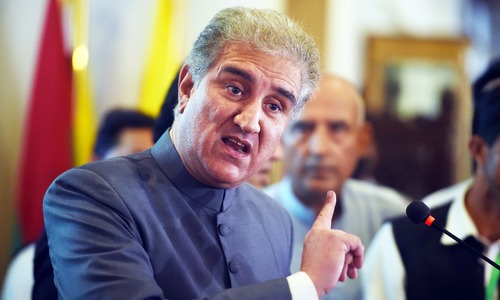
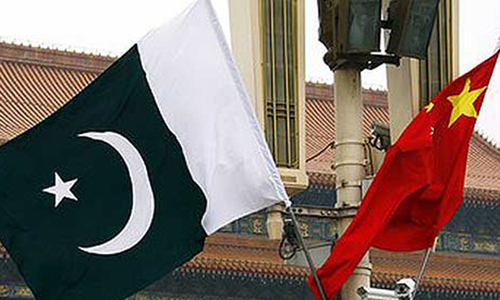
SINCE coming to power, Imran Khan and his team have repeatedly acknowledged Pakistan’s myriad foreign policy challenges. But while tweets and statements focus on reviving talks with India, the PTI-led government’s greatest challenge arguably comes across a different border, from friend not foe: China.
Do not be fooled by the $2billion post-election bailout. If anything, this timely intervention betrays China’s recognition that our new prime minister will struggle to reconcile his populist politics and the current relationship with Beijing. Indeed, China’s anxiety about Sino-Pak ties in the Khan era was betrayed the moment his victory was clear and the Chinese media began to warn Khan against paying heed to Western media coverage of the bilateral relationship.
The issue is not whether CPEC will proceed in ‘naya Pakistan’. That is a must. There is military and cross-party support for the investment corridor and, frankly, Pakistan has few other options. The issue is whether CPEC’s progress will expose Prime Minister Khan’s populism as rhetoric.
Will CPEC’s progress expose Prime Minister Khan’s populism as rhetoric?
PM Khan’s populist politics will necessarily take him down a rocky path to Beijing’s doorstep. How can he speak of transparency without being confronted with the opacity of CPEC financial arrangements? Finance Minister Asad Umar has already promised to make public the terms of CPEC deals. But will these be terms the public can stomach?
Similarly, how can PM Khan continue to rail against the Sharifs’ and the PML-N’s corruption and economic mismanagement without scrutinising CPEC projects? Railways Minister Sheikh Rashid had previously called for investigations into a CPEC power project in which he alleged corruption.
Then there’s the matter of job creation. PM Khan’s promise of creating 10 million jobs in his first 100 days has been among his most lauded. But his tenure will see an influx of Chinese workers to service CPEC projects, while unskilled Pakistani labour is relegated to the sidelines. Cue the prime minister’s impassioned speeches about the need to educate and up-skill Pakistanis, which will be on point. But human capital development cannot take place overnight, and local labour use is not China’s MO anyway. That leaves the prime minister with the disconnect between widespread unemployment even as the presence of Chinese workers grows.
PM Khan’s focus on widening the tax net will also bump against CPEC planning. Take for example the power regulatory authority, Nepra’s, decision last year to pass one per cent of the costs of 19 CPEC power projects to consumers through an increased tariff, partly to cover the expense of security provision. Or the fact that increased transparency around CPEC will further clarify that Pakistan has received loans — not grants — that will be repaid with taxpayers’ money. Won’t Pakistanis question why their tariff payments and taxes are for China’s benefit?
A savvy opposition could also attack the prime minister on the way his government balances ties with China and the US. If the PTI-led government opts for an IMF package, the bailout will coincide with the beginning of CPEC repayments, and related renegotiations. The opposition could argue that increased CPEC transparency or renegotiations with China have occurred at the behest of the IMF (and by extension, the US), and thus undermine PM Khan’s promise to equalise relations with Washington.
In recent years, the prime minister’s stance on CPEC has been strong and often principled. He was one of few political leaders willing to question and criticise projects, and push for more equitable distribution of Chinese largesse. His party called for CPEC projects to be approved by parliament. The Khyber Pakhtunkhwa government opted for ADB financing for a Peshawar bus project, rejecting Chinese offers to include it under the CPEC umbrella. And who can forget that it was Imran Khan’s 2014 dharna that led Xi Jinping to postpone his Pakistan trip and the official CPEC launch by a year? This track record indicates that the new government could be the strong negotiator Pakistan needs to transform CPEC into a genuine investment in Pakistan, for the benefit of Pakistanis.
But the prime minister’s post-election odes to China, the tweets in Mandarin, the sudden reframing (without evidence) of CPEC as a jobs generator and promoter of human development — these are the actions of one who is falling in line. Indeed, with his praise for China’s anti-corruption and poverty alleviation programmes, PM Khan has gone one step further than our previous leaders, who celebrated the strategic importance of the alliance with China, to embracing Chinese governance and values.
It seems China will get what it wants from the ‘naya Pakistan’, but for the prime minister this will be at the cost of broken promises and betrayed principles.
The writer is a freelance journalist.
Twitter: @humayusuf
Published in Dawn, August 27th, 2018