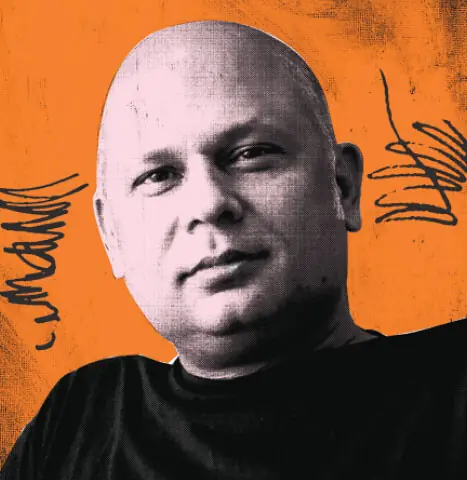
Based on a popular television show of the same name hosted by noted filmmaker Mahesh Bhatt in which he discusses Hindi films, Khwaabon Ka Safar is a historical insight into one of the biggest film industries of the world and cinephiles will relish the wealth of information — some of it fairly obscure — contained within.
Unlike other books on film history, Khwaabon Ka Safar is not strictly chronological; instead it takes readers from studio to studio, from their rise to their fall. Before it became Bollywood, the Indian film industry struggled very hard to find an identity; with this book Bhatt tells us about the men and women who built it from a haphazard group of amateurs into the sprawling behemoth it is today. Bhatt writes about directors who are no longer alive, studios that are no longer around and films that have achieved cult status wherever Indian films are watched. There are stories about unknown actors, semi-literate directors and females who were brave enough to venture into a world from which women from educated families stayed away.
For those of us who are familiar only with modern cinema, it is interesting to learn which production house started the trend of formula filmmaking or who first hit upon the idea of multi-starrers. Engaging foreign talent may seem like a development of the present global village, but it’s nothing new: New Theatres Studio (1931-present) hired a Hollywood cameraman at Rs 300 a month to train local technicians at a time when people would have to go abroad to learn the skill. Even those readers who may have some knowledge of the film world might be surprised to discover that although 1937’s Kisan Kanya is considered to be the first Bollywood film to be released in colour, V. Shantaram of Prabhat Film Company (1929-1953) was the first to attempt — and fail — at making a colour film in 1933. Not one to give in to despair, though, Shantaram moved on and made Manoos in 1939, just to tell youngsters not to follow the self-destructive path of the protagonist of Devdas.
An account of the men and women who built it from a haphazard group of amateurs into the sprawling behemoth it is today
Intriguing snippets of rivalries, rebellion and plain old powers of observation illustrate how cinematic traditions and styles evolved; the Anand brothers — Chetan, Dev and Vijay — set up Navketan Films (1949-present), but Chetan later left because of ideological and creative differences to establish his own banner, Himalaya Films. On the acting front, Shammi Kapoor’s flamboyant on-screen persona — markedly different from that of his elder brother Raj — helped usher in a new kind of leading man who was an effortless mixture of heroism and comedic flair. As for how playback singing became such a vital part of Hindi cinema, Bhatt elaborates that, in 1935, director Nitin Bose saw music composer Pankaj Mullick humming a song that was playing on a record nearby and realised how effectively he could incorporate lip-synching into film.
Bhatt pens the book like he hosts the show, and in discussing the histories of Bollywood’s top 13 studios — from Prabhat Film Company to Filmalaya (1958-present) — he shares information that would give any struggling youngster renewed enthusiasm to keep at it. For example, quite a few of us would know that director Mehboob Khan, owner of Mehboob Studios (1944-present), could well have won an Oscar for his 1957 film Mother India, but did we know that he originally came to Bombay [Mumbai] to work in the stables of Noor Muhammad Ali, a supplier of horses for films? Imagine that.
Devika Rani — often called the first lady of Hindi cinema — introduced youngsters who would go on to become legends, such as Ashok Kumar, Lata Mangeshkar and Dilip Kumar.
In the section about Bombay Talkies (1934-1953), we learn that it was the biggest production house of its time, releasing 102 films in nearly 20 years — or one film approximately every two months. It was also the very first Indian film studio to be listed on the Bombay Stock Exchange. Devika Rani — actress, wife of studio chief Himanshu Rai, later head of the studio herself and often called the first lady of Hindi cinema — introduced youngsters who would go on to become legends, such as Ashok Kumar, Lata Mangeshkar and Dilip Kumar. According to the book, the Second World War broke the studio’s back and despite being the recipient of the very first Dadasaheb Phalke award — India’s highest honour of recognition in films — Rani’s association with films ended shortly after. There are similar stories of the tragic ends of the other studios as Bhatt explains how several successful producers and directors couldn’t stand their ground against the changing times and had to end their careers on a low.
Although it is quite odd that a book about films should not have a treasure trove of pictures, here the content is so rich that one doesn’t quite notice the lack of images. Barring a few factual errors such as incorrect release dates and spellings, Khwaabon Ka Safar is a pleasant and enjoyable stroll through the avenues of old Bollywood.
The reviewer writes on film, television and popular culture
Khwaabon Ka Safar with
Mahesh Bhatt
By Mahesh Bhatt
Rupa Publications, India
ISBN: 978-8129148636
230pp.
Published in Dawn, Books & Authors, September 16th, 2018