'Breakthrough' as India greenlights Chenab hydropower projects inspection by Pakistan
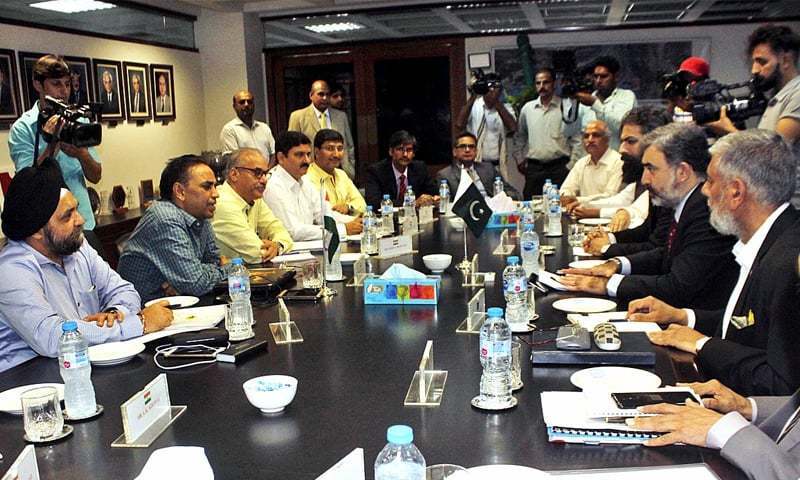

After more than four months of dilly-dallying, India has agreed to fulfil its commitment of getting its two hydropower projects — 1,000MW Pakal Dul and 48MW Lower Kalnal — inspected by Pakistani experts, officials said on Friday.
Pakistani Commissioner for Indus Waters Mehr Ali Shah said a delegation of Pakistani experts will visit the two Indian project sites on Chenab River for an inspection, scheduled for later this month.
"India has also given positive signals regarding inspection of other projects constructed on Chenab River," he revealed while speaking to DawnNewsTV.
Examine: Why the Indus Water Treaty has stood the test of time
Shah said Pakistan had achieved this "success" after forcefully raising the issue of India's violation of the 1960 Indus Waters Treaty (IWT)
Federal Minister for Water Resources Faisal Vawda hailed the development as a "major breakthrough", saying a delegation led by Shah will visit the Indian hydropower projects at the Chenab Basin for an inspection between January 27 and February 1.
"It’s indeed a feather in [the] Ministry for water resources’ cap. We welcome this gesture from India and we expect the same spirit for resolution of other outstanding issues," the minister said in a series of tweets.
Vawda observed that Pakistan and India have been engaged in the dispute relating to IWT "for ages", but New Delhi had now agreed to schedule the visit of Pakistani experts "due to our continued efforts".
India had originally agreed to allow Pakistani experts to inspect the aforementioned two projects during the 115th meeting of the Permanent Commission for Indus Waters (PCIW) held between the two countries from August 29 to 30 in Lahore last year.
Besides agreeing to an inspection of the Pakal Dul and Lower Kalnal projects, which was scheduled for September, India had also consented to a survey by Pakistani experts of the Kishanganga project at Jhelum basin at a later stage. Reciprocally, Pakistan had agreed to allow India to carry out inspection of Kotri Barrage over the Indus after September.
After initially scheduling the inspection of the projects at Chenab Basin by Pakistani experts from October 7 to 11, New Delhi had postponed the same on the pretext of local bodies’ elections in the respective areas.
During the last week of October, the Pakistani Indus water commissioner had telephoned his Indian counterpart, Pradeep Kumar Saxena, and urged him to give a schedule for the experts' visit. However, Saxena then said it wouldn’t be possible during the first or second week of December due to local Punchayat elections in Indian occupied Kashmir — the region where these projects are located.
After a reminder in November, Islamabad had on December 24 once again urged India through a letter to fulfil the commitment it made in August to schedule the hydropower projects' inspection by Pakistani experts.
Pakistan's objections
Pakistan has objections to the pondage and freeboard of Lower Kalnal, and pondage, filling criteria and spillway of Pakal Dul hydropower projects on Marusadar River — a right bank tributary of the Chenab.
Read: Pakistan's concerns regarding India's Pakal Dul and Lower Kalnal projects
Under the Indus Waters Treaty, both Pakistan and India are bound to inspect projects and share data related to water flow, storage and releases, and floods.
The treaty also empowers the two countries to mutually resolve their water related issues on their own or through arbitration and appointment of independent experts and other relevant forums.
Under the provisions of IWT, waters of the eastern rivers — Sutlej, Beas and Ravi — had been allocated to India and the western rivers — the Indus, Jhelum and Chenab — to Pakistan, except for certain non-consumptive uses by India.