Analysis: Scuttling of the near-certain Afghan peace accord


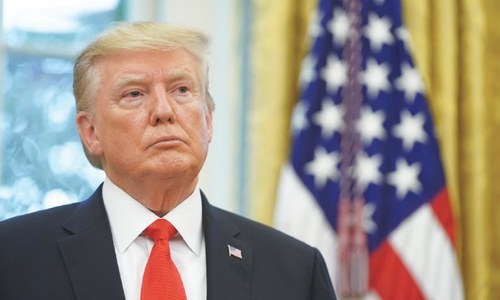
JUST days before the 9/11 anniversary, when more than anyone else Afghans pinned their hopes on a near-certain peace agreement between the United States and the Taliban to bring the longest war in the US history to an end, President Donald Trump’s irascible temperament came in the way.
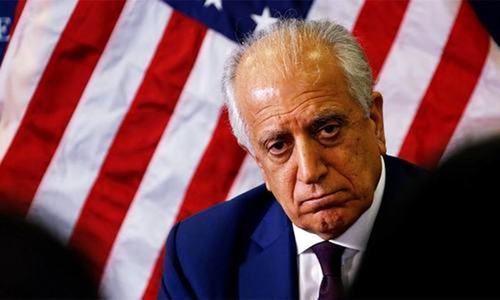
In a series of early morning tweets over the weekend, President Trump threw a spanner in the months-long efforts of his special envoy to Afghanistan, Zalmay Khalilzad, not only calling off the peace negotiations but also cancelling the hitherto secret, albeit separate, meetings with Afghan President Ashraf Ghani and Taliban No 2, Mullah Abdul Ghani Baradar.
What prompted Mr Trump to dynamite an agreement that was ready for signing and which would have fulfilled his own pre-election promise to withdraw his forces from a costly war in Afghanistan and use this in his re-election bid in 2020?
Little is known about the sudden about-turn in the peace talks beyond Mr Trump’s three tweets and Secretary of State Mike Pompeo’s subsequent explanations on different news outlets aimed to defend his unpredictable boss.
But what is known is the dramatic escalation in attacks and bombings in Kabul and elsewhere in Afghanistan by the Taliban that rattled not only the Ashraf Ghani-led unity government but also caused fear and anxiety among the people hoping for peace in their war-torn country.
No indication yet of resumption of negotiations
On Sept 2 when Mr Khalilzad told the Afghan TOLOnews that a peace agreement had been reached “in principle” with the Afghan Taliban, an explosives-laden tractor exploded in a housing compound used by various international organisations, killing 16 and wounding 19 others.
Read: Explainer: How Trump upended US-Taliban peace talks
This was followed by another suicide bombing on Sept 5, in a busy diplomatic area that also houses the US embassy. The bombing left 12 people dead, including an American serviceman (the fourth US soldier killed in two weeks) and a Romanian soldier. The Afghan Taliban claimed responsibility for both the attacks.
“Peace with a group that is still killing innocent people is meaningless,” said Afghan President Ghani in a statement.
Two days later President Trump fired a slew of tweets, calling off the peace negotiations and cancelling a meeting with the Taliban leaders at his Maryland retreat in Camp David. He accused the Afghan Taliban of stepping up attacks in order to “build false leverage” and “strengthen their bargaining position”.
“If they cannot agree to a ceasefire during these very important peace talks, and would even kill 12 innocent people, then they probably don’t have the power to negotiate a meaningful agreement anyway,” the US president said in one of his tweets.
The Afghan Taliban, however, say they had agreed to a ‘partial ceasefire’ limited to the foreign forces in Afghanistan as part of the proposed peace agreement with the United States but that the terms of the deal would have come into effect only after it had been signed.
“We had an agreement on partial ceasefire but it was supposed to be signed to come into effect,” Taliban spokesman Suhail Shaheen told Dawn from Doha. “The partial ceasefire was to be limited to the foreign forces in Afghanistan,” he said.
“The agreement was ready for signatures,” he said. “Khalilzad had put his initials on the agreement,” he added.
“Gen Austin Miller had also agreed with the terms of the agreement.”
Mr Shaheen said that copies of the agreement which contained the initials of Mr Khalilzad and a Taliban representative were handed over to Qatar, while the two sides retained one copy each.
Gen Miller is the commander of Nato’s Resolute Support Mission and the United States Forces in Afghanistan.
As part of the proposed deal, the US is required to withdraw 5,400 of its troops from Afghanistan within 20 weeks of the signing of the agreement. The US currently has over 14,000 troops in the war-torn country.
“We were under no obligation to abide by an agreement that had not been signed as yet,” said Mr Shaheen. Also, he said, under the terms of the agreement the two sides had agreed to cease hostilities against each.
“Ceasefire in the whole of Afghanistan was to be part of a comprehensive political settlement through an intra-Afghan dialogue. An intra-Afghan dialogue was Part Two of the agreement,” he said.
But critics of the proposed agreement, parts of which were leaked to the media in Afghanistan soon after Mr Khalilzad’s visit, say it would have given the Taliban almost a free hand to mount further attacks and would have made Afghan security forces more vulnerable.
Didn’t Mr Khalilzad and Gen Miller know the implications of signing a partial ceasefire agreement that would have saved foreign forces from attacks but would have given the Afghan Taliban a carte blanche to go after the Afghan forces without the fear of being attacked by the US-led Nato forces in Afghanistan? Or did they overlook a major concern shared by many Afghans to just get a peace agreement to ensure American troops’ withdrawal from Afghanistan?
Secretary Pompeo appeared to confirm the Taliban’s assertion. “So we found that arrangement acceptable, that the verification was adequate and we concluded it was a perfectly appropriate place,” he said in an interview with Fox News on Sunday, while referring to the now-cancelled secret meeting with the Afghan Taliban leaders at Camp David.
Read: US Secretary of State doesn't rule out new Taliban talks
There is no immediate indication as to whether and when these peace negotiations might resume. Pompeo said the months-long peace talks with the Taliban were dead “for the time being”. The Taliban spokesman said exchanges were still being made through emails and WhatsApp. “There is no formal contact,” Mr Shaheen said. “But we remain in touch with each other through email and WhatsApp.”
Published in Dawn, September 12th, 2019