Health post at Taftan border to check transmission of diseases


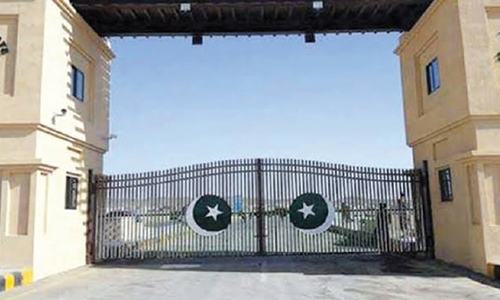
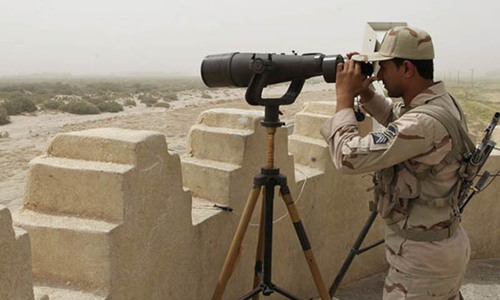
ISLAMABAD: Pakistan and Iran have agreed to establish a health post at Taftan border to control the transmission of poliovirus, diseases and infections.
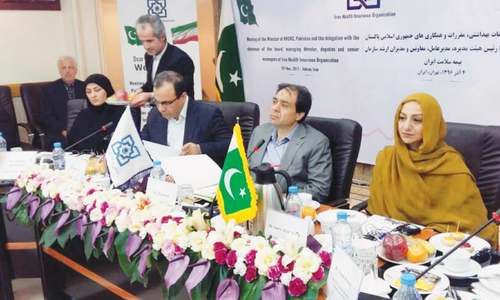
The agreement was reached after Special Assistant to the Prime Minister on Health Dr Zafar Mirza met Minster for Health and Medical Education of Iran Saeed Namaki in Tehran on the sidelines of the 66th Session of Regional Committee Meeting of World Health Organisation.
The health ministers and delegates of Eastern Mediterranean Region of WHO comprising 22 countries took part in the meeting.
Talking to Dawn, National Health Services Secretary Dr Allah Bakhsh Malik said that in the current era transfer of virus and diseases from one country to another had become a routine.
“A large number of pilgrims visit different places in Iran and then go to Iraq. They will be checked while going to Iran as well as on their return to Pakistan and, if infection is found, quarantine will be ensured to safeguard the people from diseases,” he added.
In reply to a question, Dr Malik said that the health ministry had talked to the interior ministry to get a space for setting up a health post at the border complex. “The post will be made functional within one month,” he said.
According to a statement issued by the health ministry, Dr Mirza highlighted various reforms initiated by the present government in the health sector, including key initiatives like social health protection which is being extended in phases to all eligible families across the country.
He lauded the achievements of Iran in the area of universal health coverage as an example in the region and said that primary healthcare, polio eradication, controlling communicable and non-communicable diseases, pharmaceuticals and health reforms were the areas in which both countries could collaborate and benefit from each other’s experiences.
The Iranian health minister expressed his desire to provide all-out support to strengthen Pakistan’s health system.
The two sides also agreed that a 14-member delegation of health experts from all over Pakistan would be visiting Iran in November for two weeks to study the country’s health system. Likewise, the Iranian side was invited to send its health experts to Pakistan on a mutually agreed date.
They agreed to cooperate with each other in the fields of pharmaceuticals and medical education.
Published in Dawn, October 16th, 2019