Imran rejects CPEC’s criticism as ‘nonsense’


WASHINGTON: Prime Minister Imran Khan has rejected the criticism of the China-Pakistan Economic Corridor (CPEC) as ‘nonsense,” insisting that the project “is really helping” the country.
In an interview to a US news channel CNBC, shown on Wednesday night, Mr Khan also urged US President Donald Trump and the United Nations to mediate between Pakistan and India over Kashmir.
“When the Chinese came to help us with this Belt and Road Initiative (BRI) and CPEC, we were really at the rock bottom,” said the prime minister when the interviewer, Hadley Gamble, asked if the project was a debt-trap for Pakistan.
“So, we are really grateful to the Chinese that they came and rescued us,” he added.
“They came and pumped in, not just they gave us loans – and the loans, by the way are barely five or six percent of the total portfolio,” said Mr Khan, rejecting the suggestion that the CPEC was a debt-trap. “This is nonsense.”
Terms Kashmir far more serious a problem than people realise
The Chinese, he said, actually helped Pakistan with investment and because of them the country now “has an opportunity to attract foreign investment”.
The prime minister explained that his government was now creating special economic zones to attract investment. “We just opened two and we are opening more where we are giving special concessions to industries,” he said.
Mr Khan said the CPEC was “beyond BRI as China was also helping Pakistan in technology transfer. They are especially helping us in agriculture because Chinese technology (can boost) development (in this sector) much better than Pakistan’s as “our productivity is very low”.
The CPEC, he said, was also teaching Pakistanis the skills they needed to benefit from the CPEC projects. “They are building skill centers in Pakistan. So, they are helping us and we are grateful,” the prime minister said.
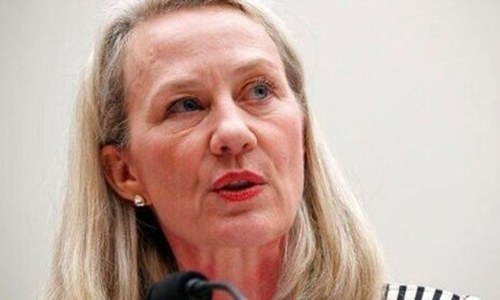
Earlier this week, senior US diplomat Alice Wells once again urged Pakistan to rethink its wholeheartedly embrace of China’s economic initiative. Speaking at a think-tank in Islamabad, she alleged that there was no transparency in the CPEC projects, and warned that the country’s debt burden was growing due to the Chinese financing.
Both Chinese and Pakistani officials have rejected the US criticism as misleading but the prime minister’s remarks further cemented the impression that Islamabad remains committed to the CPEC.
The prime minister spoke with CNBC in Davos, Switzerland, where he was attending the annual summit conference of the World Economic Forum.
When the interviewer asked how useful could the US president be in settling the Kashmir dispute, Mr Khan said: “I can’t say what would be the outcome but for me it is important to try my best because Kashmir is a far more serious problem than people realise.”
“This is serious because there are two nuclear-armed countries,” the prime minister said. “That’s why I want President Trump, head of the most powerful country in the world — he should intervene right now. United Nations, or President Trump through the UN at least.”
Mr Khan explained that the possibility of an India-Pakistan conflict had increased because “India has been taken over by an extremist ideology, which is called Hindutva or the RSS.”
The prime minister said that the founding fathers of RSS were “inspired by the Nazis” and the Nazi concept of “racial purity” and “believed in ethnic cleansing, of Muslims.”
Mr Khan said that the ideology which was responsible for the assassination of Mahatma Gandhi and the group that was declared a terrorist organisation three times by previous Indian governments had now taken over India.
Responding to another question, he said the people of Kashmir, through a referendum could decide whichever country they wanted to join.
“Now, that disputed territory has been annexed by India, and, they are trying to change the demography of (the) people of Kashmir, which according to the fourth Geneva Convention is a war crime,” he added.
The prime minister also expressed concern about ongoing protests in India over a controversial citizenship bill passed last December that many say is set to disproportionately affect Muslims.
Published in Dawn, January 24th, 2020