Taliban could ‘possibly’ seize power after US leaves, warns Trump


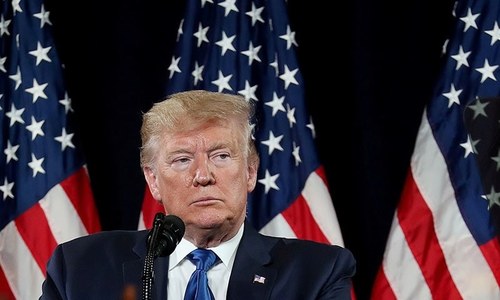
WASHINGTON: President Donald Trump on Friday said the Taliban could “possibly” overrun the Afghan government after the United States withdraws from the country, leaving the US-backed authorities to fend for themselves.
“Countries have to take care of themselves,” Trump told reporters at the White House. “You can only hold someone’s hand for so long.” Asked if the Taliban could eventually seize power, Trump said it’s “not supposed to happen that way but it possibly will.” “We can’t be there for the next 20 years. We’ve been there for 20 years and we’ve been protecting the country but we can’t be there for the next — eventually they’re going to have to protect themselves,” he said.
Trump said the Afghan government’s ability to defend itself from the guerrillas after US forces pull out was unknown.
“I don’t know. I can’t answer that question,” he said. “We’ll have to see what happens.”When President Donald Trump goes to the polls in November, he clearly wants to tell the American people he has ended the “forever wars” that have become the longest foreign conflicts for the US military. Whether that will truly be the case, however, is a rather different matter.
At the heart of that strategy is this month’s tentative peace deal between the United States and Taliban, signed after years of often strained and sometimes secret diplomacy. Under that deal, the US is scheduled to withdraw almost all its 12,000 forces from Afghanistan over the next 14 months — a date that, perhaps through no coincidence, extends well into the next presidential term.
That the six months between now and the US polls will see a significant withdrawal of US forces, therefore, does not seem in doubt. (Washington says it plans to pull out a first batch of 8,600 troops within 135 days of signing the deal.) Much less certain, however, is the fate of the next stage of negotiations with the Taliban, due to meet Afghan government representatives for peace talks in Norway on March 10.
Whether that gathering will happen, however, is in itself uncertain — the Afghan government is decidedly lukewarm on a pledge to free Taliban prisoners stipulated in the accord.
Should that deal unravel, it would be another reminder of the very different priorities Washington and the Afghan government of President Ashraf Ghani.
For the United States, particularly under Trump, what truly happens in the country is scarcely a priority, providing it does not again become a haven for militants such as the militant Islamic State group or Al Qaeda.
Those in charge in Kabul, in contrast, remain in a knife fight for control of a country in which the government only truly holds the cities while vast swathes of the countryside remain under Taliban domination.
Leaving aside the broader geopolitics, the greatest argument for a peaceful settlement in Afghanistan remains that after almost two decades of fighting, it remains distinctly doubtful that either side truly has the ability to change that dynamic.
If the Afghan government was unable to extend its remit to the countryside with the backing of tens of thousands of Western forces, there seems little reason to conclude it can do so now. The Taliban, meanwhile, have rarely shown the ability to go beyond hit and run and suicide attacks in major cities.
Published in Dawn, March 7th, 2020