

Indian police clamp curbs on media coverage of gun battles in occupied Kashmir
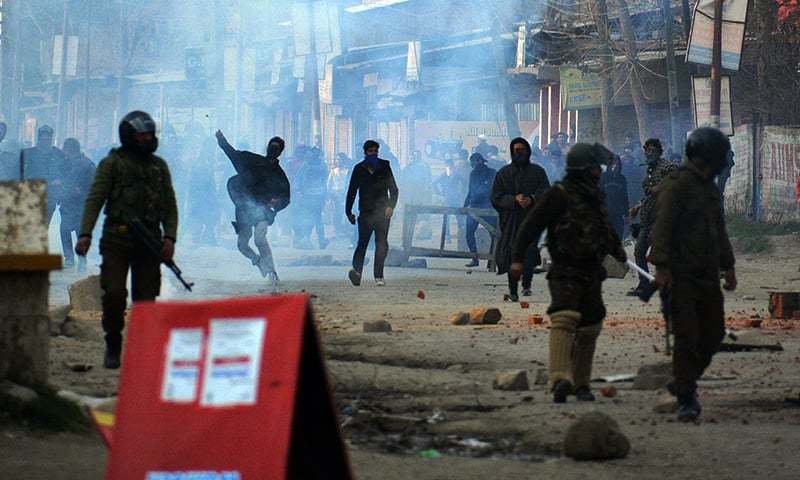

Police in occupied Kashmir have asked journalists to refrain from live coverage of gun battles with fighters opposing Indian rule in the region or protests, calling such reports a provocation amounting to interference in their duties.
India has deployed tens of thousands of police and soldiers to keep the peace in the occupied region after revoking its constitutional autonomy in 2019 to weld the region more tightly to the country.
In an order this week, the police chief in the occupied Kashmir Valley set out new guidelines for journalists covering the insurgency, in which fighters have targeted security forces.
“No operational content should be carried which is likely to incite violence or contains anything against maintenance of law and order, or which promotes anti-national sentiment,” police chief Vijay Kumar said.
Media were advised to stay away from the site of gun battles or situations that shaped as a challenge to law and order, and not engage in live coverage, he added.
Kumar said journalists' right to freedom of speech and expression was subject to reasonable curbs, so as not to endanger the lives of others or compromise national security.
“Do not interfere in the professional and bonafide duty of police and security forces at encounter sites,” he said.
More than 50,000 people have died in the revolt that erupted in 1989, government figures show. Human rights and separatists put the toll at double.
In the past, police have said the presence of television cameras and journalists at trouble spots in occupied Kashmir often encouraged people to come out in the streets and break the law by throwing stones.
But journalists said the new rules were meant to coerce them into not reporting.
“Press freedom is the cornerstone of a democracy and any attack on it undermines the democratic setup of which media is the fourth pillar,” the Kashmir Press Club said in a statement.
“Any such attack on press freedom and journalism is highly distressful.”




























