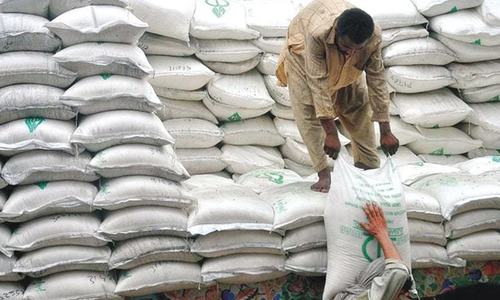
Sugar, wheat push food import bill up by 54pc


ISLAMABAD: Pakistan’s food import bill widened by 54.45 per cent to $6.12 billion year-on-year during the nine months of the current fiscal year (9MFY21) mainly due to sugar and wheat imports to bridge the shortfall in domestic production of agriculture produce.
The rising food import bill also triggered trade deficit which would cause some uneasiness on the external side for the government in upcoming months, data compiled by the Pakistan Bureau of Statistics (PBS) showed on Friday.
The share of food items in the total import bill reached 15.48pc this year, compared to 11.38pc last year, making the country dependent on imports to ensure food security.
Trade deficit is widening as the overall import bill of the country has been on the rise since November last year, mainly due to an increase in the import bill of eatables. The import bill inched up by 13.59pc to $39.51bn in 9MFY21 as against $34.79bn over the corresponding period last year.
The eatable import bill of all products posted growth in value and quantity during the period under review, a clear indication of shortage in domestic production. Within food group import, the major contribution came from wheat, sugar, edible oil, spices, tea and pulses.
Edible oil import witnessed a substantial increase during the period under review in quantity, value and per value terms.
Import of palm oil recorded a growth of 34.83pc in value in 9MFY21 to $1.86bn from $1.38bn over the corresponding months of last year. In quantity, a growth of 7.30pc was also recorded in import of palm oil during the same period.
The prices of vegetable ghee and cooking oil posted growth during the last few months for domestic users. The Ministry of Industries failed to correct the prices as production of vegetable ghee and cooking oil also dropped in eight months this year. However, import of soybean oil increased by 6.72pc in value and 10.36pc in quantity.
Pakistan imported 3.612 million tonnes of wheat worth $983.328m in nine months this year as against no imports last year. In March, the import of wheat stood at 229,696 tonnes as against no imports last year. The bulk import of wheat was made to bridge the gap between supply and demand of staple food in the market.
The federal government has also hinted at more wheat imports to build buffer stock to avoid shortages in the domestic market.
Similarly, import of sugar stood at 279,529 tonnes in nine months this year as against 4,751 tonnes over the corresponding months of last year, showing an increase of 5,335pc. In the month of March 751 tonnes of sugar was imported as against 393 tonnes of sugar over the last year, showing an increase of 194.5pc.
Import of tea posted growth of 15.64pc during nine months this year while that of spices increased by 31.98pc. The growth is mainly due to a drop in import of these products under transit trade and controlling of smuggling at border areas.
The import bill of pulses, dry fruits, milk products and other food products witnessed a massive growth during the period under review.
Published in Dawn, April 17th, 2021