Deporting Afghans: a never-ending story of miseries

QUETTA: Some stories do not need to be described in words, for words cannot do justice and truly reflect gravity of the sufferings people have gone through. In such situation, resorting to words to bring a story to the limelight may appear rather insensitive.
When I recently visited a group of Afghan refugees on the outskirts of Quetta, on Baleli Road, their faces spoke of the story silently on their own, reminding me of the challenges and sensitivities involved in jotting down their miseries. Nor would I have the proper questions to put to them. Instead, I ran out of the questions to ask them about the ordeal they have undergone back in Afghanistan, so much so the few questions I put to them bored me.
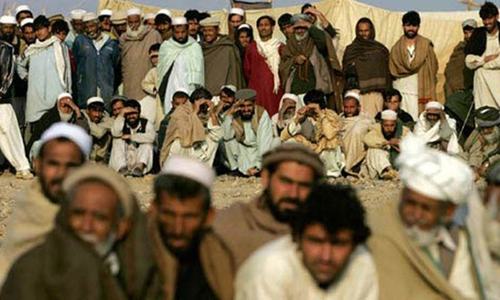
If I do not forget, the name of the lady was Zaitoon or Zainab. She had come along with her extended family from Kunduz, in northern Afghanistan. All of them were Pashtuns hailing from Kunduz, but they spoke Dari, the official language of Afghanistan, and the language mostly is spoken by Afghans in the northern belt of Afghanistan. There were around a two dozen families staying in tents in areas along a road leading out of the Balochistan capital. All of them had fled the skirmishes between the Afghan security forces and the Afghan Taliban. Some of the refugees had sustained bullet wounds, too.
Ordeal of a woman and her extended family from Kunduz
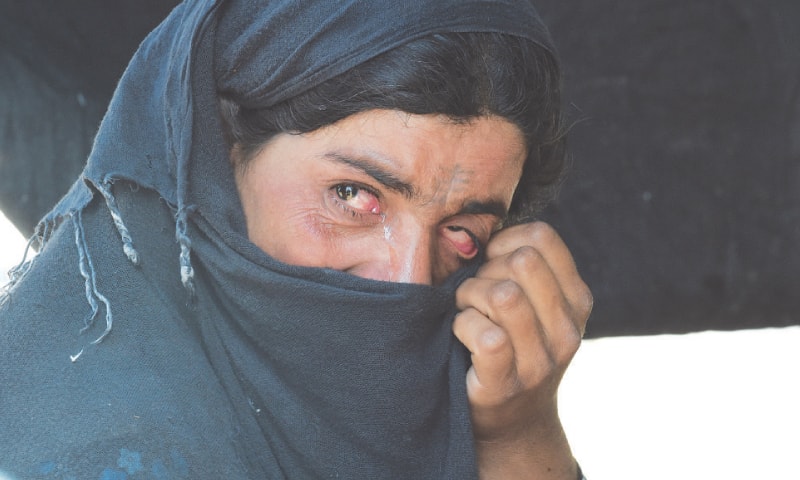
Bruised, teary, gaunt, exhausted and deathly pale face of Zaitoon or Zainab told the story of tyranny, hopelessness and helplessness of her country. She was wearing a male black chador to cover her head. As she attempted to speak her heart out to share the ordeal she, her family and brethren were faced with back in Afghanistan, she burst into tears. She was feeding her children with green tea and dried bread that she had brought with her from Kunduz. She would dip the dried bread into tea to soften it up before offering it to her children in an attempt to fill their empty bellies. In a nutshell, she was the true picture of today’s Afghanistan that is not only hungry but also hopeless.
She continued to shed tears as if she wanted to comfort her miseries through shedding tears. But she was even bereft of the tears soon. The authorities asked them to pack up their belongings, which were few, including dried breads. They were accompanied till Badini border town in Killa Saifullah, to be dispatched back to Afghanistan. They had come to Pakistan with the last hope that too was shattered. Because the human miseries are too divided up amongst the borders and barriers, which people are hardly aware of.
While visiting Quetta commissioner office on Inscomb Road, it emerged that 965 Afghans from Quetta and 1,486 from Karachi and Lasbela have been deported back to Afghanistan via Quetta so far. Like others she too was deported back to Afghanistan, via Badini border in Killa Saifullah district. Sources claimed they were deported via Badini border town, some five hours’ drive from Quetta, by bumpy roads to reprimand them for illegally entering Pakistan despite the fact that Chaman border is just two hours’ drive away.
Background interviews suggest the refugees being deported back are predominantly the poor Afghans, who had moved from pillar to post to enter Pakistan in search of livelihood and peace.
Hammal Aslam Baloch, who heads a research institute called International Center for Refugee & Migration Studies at a Quetta-based varsity, echoed the aforementioned claims. According to him, there has not been a major influx from Afghanistan, and deporting back those who have come from Afghanistan on humanitarian grounds is a human rights violation.
“Single females too have fled Afghanistan, in order to save their lives,” he said.
While working on this story, one of the younger Afghan girls in Quetta reached out to me on my WhatsApp number, as she does not have a Pakistani number, to implore me for help whom I had met recently. She is afraid of being deported back to Afghanistan, and she wrote, with a loud crying face emoji, “We are in a very bad situation, please help me.”
Chaman border, the second largest border point in Pakistan after Torkham, has been closed for traffic of Afghans travelling to Pakistan following the restrictions on behalf of the authorities. Yet some Afghans intrude after greasing palms of local authorities, reveals a Quetta-based official.
The arrival of Afghan refugees in Balochistan and elsewhere in the country is not a new phenomenon, as the country has housed hospitably millions of Afghan refugees, particularly in Balochistan and Khyber Pakhtunkhwa provinces bordering Afghanistan, since the 1979 Soviet invasion.
This time, after the recent withdrawal of the US forces and installment of the Taliban government in Kabul, as more Afghan refugees make their way to Pakistan, National Security Adviser Dr Moeed Yusuf has maintained that the country is in “no condition to accept more refugees”, though Pakistan will do whatever is possible to help the Afghans.
On a chilly day in mid-October, on Quetta’s Baleli Road leading to its outskirts as well as to the camp that houses Afghan families, traffic is as usual roaring, but there is calm in the air as sun descends behind Quetta’s mountains. I get down from the car to sit by the roadside for a while, thinking of the miseries every new day brings to the Afghan refugees.
Zaitoon, who had come over here along with her family recently in the hope of evading miseries, was deported like other Afghans to open a new chapter replete with miseries at the place where she had rushed to take a sigh of relief. That is what we have deprived her and other such refugees of.
Published in Dawn, October 25th, 2021