Donors back $280m transfer for Afghan food, health schemes


WASHINGTON: Donors agreed on Friday to transfer $280 million from a frozen trust fund to the World Food Programme (WFP) and Unicef to support nutrition and health in Afghanistan, the World Bank said as it seeks to help a country facing famine and economic freefall.
The World Bank-administered Afghan Reconstruction Trust Fund (ARTF) will this year give $180m to WFP to scale up food security and nutrition operations and $100m to Unicef to provide essential health services, the bank said in a statement.
The money would aim to support food security and health programmes in Afghanistan as it sinks into a severe economic and humanitarian crisis that accelerated in August when the Taliban overran the country as the western-backed government collapsed and the last US troops withdrew.
The United States and other donors cut off financial aid on which Afghanistan became dependent during 20 years of war and more than $9 billion of the country’s hard currency assets were frozen.
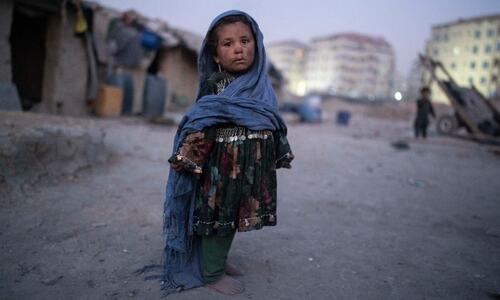
The United Nations is warning that nearly 23 million people, about 55 per cent of the population, are facing extreme levels of hunger, with nearly 9 million at risk of famine as winter takes hold in the impoverished, landlocked country.
Using reconstruction trust fund money and channeling it through the WFP and Unicef, both part of the UN family, appears to be a way to get funding into the country for basic needs in a manner that does not necessarily implicate US sanctions against the Taliban.
“This decision is the first step to repurpose funds in the ARTF portfolio to provide humanitarian assistance to the people of Afghanistan at this critical time,” the bank said, saying the agencies had presence on the ground to deliver services directly to Afghans in line “with their own policies and procedures”.
“These ARTF funds will enable Unicef to provide 12.5 million people with basic and essential health services and vaccinate 1 million people, while WFP will be able to provide 2.7 million people with food assistance and nearly 840,000 mothers and children with nutrition assistance,” it added.
In its statement, the bank said it would “continue to work with ARTF donors to unlock additional ARTF funds to support the Afghan people”.
Laurel Miller, a former acting US special representative for Afghanistan and Pakistan, criticised the decision to tap the ARTF for strictly humanitarian aid.
Published in Dawn, December 12th, 2021