Casualties in Afghanistan, Iraq much higher than US admitted: NYT


WASHINGTON: Data collected after years of litigation and months of investigation persuaded The New York Times to conclude that civilian casualties in Iraq and Afghanistan were much higher than the United States ever acknowledged.
Summing up its efforts to probe the US wars in the greater Middle East region, the newspaper wrote: “The promise was a war waged by all-seeing drones and precision bombs.” But the documents NYT obtained showed “flawed intelligence, faulty targeting, years of civilian deaths — and scant accountability”.
The newspaper got access to the Pentagon documents about the war through Freedom of Information requests beginning in March 2017 and lawsuits filed against the US Defence Department and the Central Command.
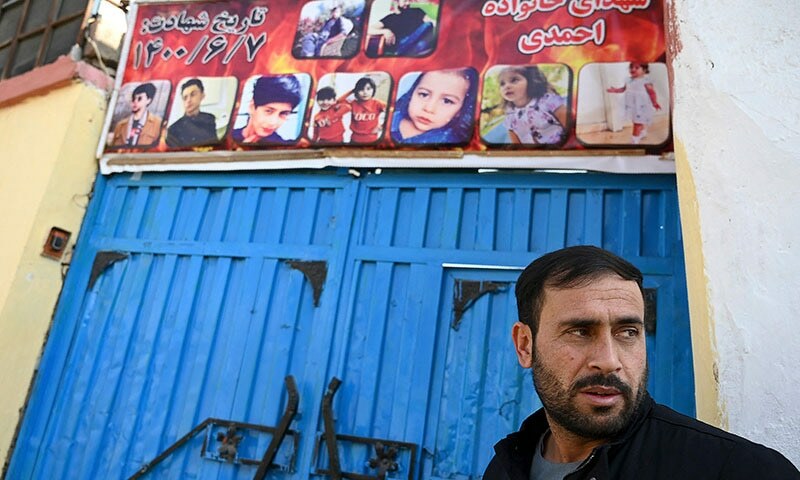
NYT reporters also visited more than 100 casualty sites and interviewed scores of surviving residents and current and former American officials. The findings, published this week in a two-part report, revealed that the US air war was “deeply flawed” and the number of civilian deaths had been “drastically undercounted”, by at least several hundreds, NYT reported.
The document contradicted the Pentagon’s claim that the drone technology made it possible to destroy a part of a house filled with enemy fighters while leaving the rest of the structure standing. The NYT report revealed that over a five-year period, US forces executed more than 50,000 airstrikes in Afghanistan, Iraq and Syria, with much less than the advertised precision.
Noting that before launching airstrikes the military must navigate elaborate protocols to estimate and minimise civilian deaths, the report acknowledged that often available intelligence “can mislead, fall short, or at times lead to disastrous errors”.
The newspaper pointed out that sometimes videos shot from the air did not show people in buildings, under foliage or under tarpaulins or aluminum covers. Besides, “available data can be misinterpreted, as when people running to a fresh bombing site are assumed to be militants, not would-be rescuers”, the report added.
“Sometimes men on motorcycles moving ‘in formation’, displaying the ‘signature’ of an imminent attack, were just men on motorcycles,” the report observed.
NYT cited three specific reports to prove this point. One such case was a July 19, 2016 bombing by US special forces of three presumed Islamic State militant group’s staging areas in northern Syria. Initial reports were of 85 fighters killed. Instead, the dead were 120 farmers and other villagers.
Another example was a November 2015 attack in Ramadi, Iraq, caused by a man seen dragging “an unknown heavy object” into an Islamic State position. The “object”, a review found, was a child, who died in the strike.
Published in Dawn, December 21st, 2021