KARACHI: Pakistan’s shift to imported liquefied natural gas (LNG) is undermining the country’s energy security and financial stability, according to a research report released by the Institute for Energy Economics and Financial Analysis (IEEFA) on Thursday.
Speaking at its launch, report co-author Haneea Isaad said LNG imports can rise to more than $32 billion by 2029-30, up from nearly $2.6bn in 2020-21. “LNG sourced from global markets has become five to 10 times more expensive than domestically produced gas,” she said.
LNG supplies have also been unreliable. Its suppliers under long-term contracts have defaulted on at least 11 cargoes since January 2021, contributing to fuel and power shortages. Extreme LNG price volatility continues to stymie energy sector planning and expose the government to massive subsidy burdens, she added.
“Pakistan’s vulnerability to commodity market shocks has only been increasing in the wake of the Ukraine crisis,” said report co-author Samuel Reynolds. Coupled with the global economic recovery from the Covid-19 pandemic, price-sensitive countries such as Pakistan may be unable to compete with wealthier buyers in Europe and Northeast Asia, he added.
The report examines key risks for LNG imports and provides recommendations to mitigate the financially unsustainable growth of LNG import demand.
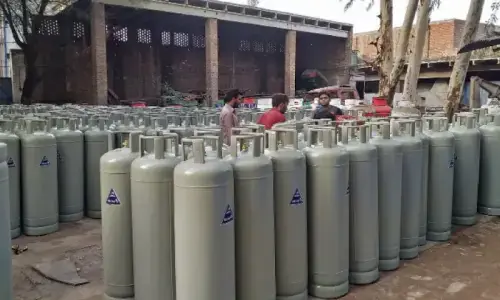
Pakistan imported 7.4 million tonnes of LNG in 2020. The government expects LNG demand to grow rapidly over the next decade. There are currently at least four major LNG import terminal projects at various stages of development.
However, its high cost has shed new light on many of the pre-existing issues with the country’s gas system. These problems include final tariffs that are not reflective of gas costs, inefficient cross-subsidisation of gas tariffs and high volumes of unaccounted for gas (UFG) that are lost in transportation through the network.
“As more LNG is injected into this faulty network, financial issues in Pakistan’s gas sector are likely to worsen significantly,” said Mr Reynolds.
Greater reliance on imported LNG will only reinforce credit risks for investors in the country’s LNG-to-power value chain. Planned pipeline projects and terminals may also take time to materialise as geopolitical conflicts and unviable economics exacerbate stranded asset risks for LNG infrastructure.
In the power sector, LNG shortages have forced 3,500 megawatts of electricity capacity offline since December 2021 and have contributed to nationwide loadshedding of 10-18 hours a day in recent weeks.
“In the textile sector, power generation costs can amount to roughly 30-40pc of the production costs,” said Ms Isaad. “Since the textile industry depends on gas-based power generation, rising LNG prices can grossly reduce profit margins.”
The fertiliser sector also has an entrenched dependence on natural gas as a fuel and feedstock, but the sector pays among the lowest prices despite high costs. Fertiliser accounts for 16pc of national gas consumption, but only 3pc of revenues of state-owned gas transmission companies.
Instead of rapidly ramping up LNG imports, Pakistan’s near-term focus should be on using the existing LNG supply more efficiently by changing regulatory incentives, rationalising tariff structures and implementing energy efficiency programmes, she said.
“More coherent strategies for LNG procurement and tenders, along with maximising the utilisation of existing LNG terminals, can also help improve energy security without major new infrastructure additions,” said Ms Isaad.
Mr Reynolds noted the focus should be on the demand side of the equation, and less so on expanding supply.
Published in Dawn,June 17th, 2022