Loag Sargoshiyon Mein Goya Hain
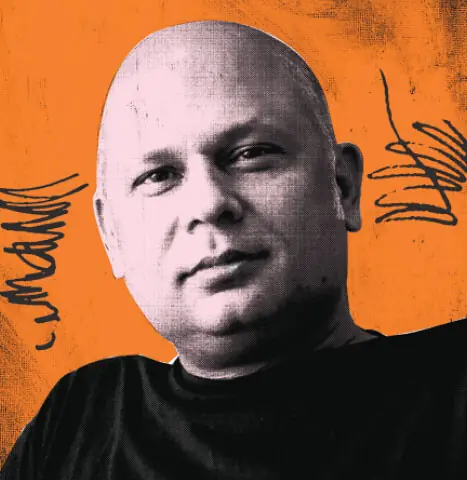
By Raja Shehzad
Maktaba-e-Danyal, Karachi
ISBN: 978-9694191089
332pp.
Imagine visiting an exhibition of black-and-white photographs. The theme of the photo collection is homeless people living on the pavements of the city. They are dressed in tattered rags, but it is more than just their bodies that are exposed. There is nothing to hide their goodness, meanness, or perversions. Everything is out there in the open, for all to see.
Loag Sargoshiyon Mein Goya Hain [People Speak in Whispers] is this exhibition of photographs, presented in the form of words. The debut collection by Raja Shehzad comprises 64 short stories and a novella which, for the most part, portray the darker side of humanity with stark realism.
The 64 short stories are short. Very much so. Some are less than a page long, the longest run to three and a half pages. Most consist of pen sketches of diverse and compelling characters that dot our surroundings, exist on the peripheries of our own networks of relationships and remind us uncomfortably of people we may know.
The book is an intriguing and unusual kind of read for several reasons. To start with, let’s discuss its language. Shehzad writes primarily in the dialect of middle- and lower-middle class Karachi, heavy on Uttar Pradesh-influenced street Urdu with a generous dose of Gujrati, Sindhi, Hindi and Punjabi thrown in. The diction and syntax are catchy and speak of the gullies [lanes] and mohallas [neighbourhoods] that characterise the city so well.
A debut book of short stories and a novella are evidence of the author’s incisive knowledge of the vast range of communities living in Pakistan
Then there are the expletives — bordering on pornography, sans eroticism — that appear spontaneously and abundantly. This is the language of the mean, hypocritical, twisted and damaged characters that swarm Shehzad’s stories, living a constant tussle between basic individual human urges and social compulsions.
One of the more notable tales is Aqliyat [Minority]. In a few short sentences, the author paints the background and environment: “This was clearly a lower-middle class Rangar Rajput Qaimkhani family whom people called Hindustani up to 1980-85. Thereafter, they called them Mohajir. Grandma’s knees were gone, but not her ego. She ruled the household. Apa Najma was the old-timer’s daughter-in-law and a niece, too.”
With the stage-setting niceties out of the way, the narrative gets into unpacking the character and life of a eunuch adopted by this family as an orphan child.
‘Yeh Rishtay’ [These Relationships] also involves a transgender child finding a new family, but while Aqliyat is about social integration, ‘Yeh Rishtay’ is about the bond of faith between a mother and her adopted son and is probably one of the most touching and captivating tales in the collection.
‘Sahih Ishq’ [True Love] shows how finding a person to share one’s life with can become an exercise in despair simply because of changing times and places — an ageing Bengali woman desperate to get married receives a highly promising proposal; alas, she must decline the suitor knowing full well she will not get another proposal anytime soon, simply because he is West Pakistani and the year is 1971 and East Pakistan is breaking away.
The main character of Khushgawar Izdawaji Zindagi Ka Raaz [The Secret of a Happy Marriage] is a jealous and abusive husband who brings home a second wife. As time passes, Wife No. 2 begins to receive the same abusive treatment that the man has long been showering on Wife No. 1. Unable to take it anymore, the second wife decides to leave. But on her last night in her husband’s house, she makes a discovery that sets her on a trajectory vastly different from what she had envisioned.
Shehzad’s incisive and sophisticated knowledge of the vast range of communities living in Pakistan, and of their traits, dialects and quirks, is remarkable and singular. Perhaps it arises from his own lived experience of growing up with a Potohari father and Aga Khani mother in an Urdu-speaking neighbourhood.
He moved to New Zealand approximately 20 years ago, where he presently resides with his wife and two sons. So, it is a credit to his observational skills — as well as memory — that he depicts the peculiarities of Pakistan’s Hindus and Christians, Jews, Bahais, Parsis and Muslims with such aplomb.
After the five dozen or so short stories, comes the novella Agiyari [Fire Temple], a meticulously sketched work that matches Bapsi Sidhwa’s The Crow Eaters for its engaging portrayal of Karachi’s Parsi community.
The protagonist of Agiyari is Timmy, a 50-year-old, unmarried Parsi woman. After her parents die, Timmy finds herself living alone in a flat in a Parsi compound in Karachi. She is financially stable and possesses a good job, but that doesn’t stop her from getting sucked into an interminably monotonous daily routine.
All her efforts to escape loneliness — and find a suitable husband — fail. To add to her miseries, her old Muslim driver, who also served as a handyman for the apartment compound, also dies.
As he takes readers through Parsi culture and idiosyncrasies via a vividly described series of events, Shehzad illustrates the universal themes of the individual human condition, oppression and anguish under crushing social norms.
But natural human aspirations and the underlying quest for a purpose in life transcend ethnic and political divides. Timmy’s dimming hopes of finding a life companion are rekindled when her deceased Muslim driver’s young, athletic son arrives to take up his father’s job. Roping in Timmy’s young work colleague — a Christian girl named Farzana — they design an elaborate plan to elope. A tale of intrigue and betrayal ensues, spreading over three decades and 91 pages, and shifting in locale from Karachi, to Lahore, to London.
Although this is Shehzad’s debut book, one gets enough of a feel of his style to say that the sad, cynical flavour swamping Agiyari is typically Shehzad. The characters are true to life and highly plausible, though overstretched for effect in a few places. For instance, the transformation of Timmy’s confidant, Farzana, necessitates plenty of suspension of disbelief, because it is not at all easy for a daughter of sweepers in Pakistan to become a sharp, prominent and rich socialite in the United Kingdom.
Be that as it may, the peculiarities of Shehzad’s characters, their intensity and the narrative will compel readers to engage with the book even if they find the plots of many stories to be elusive. It all really boils down to a simple formula that the author sticks to: he doesn’t tell. He doesn’t judge. He merely shows. How willing and ready is the reader to see, well, that depends on the reader.
The reviewer is a freelance writer and translator and can be reached at mehwer@yahoo.com
Published in Dawn, Books & Authors, July 24th, 2022