THE recently announced rollback of a measly fixed monthly tax on traders shows how the political interests of ruling parties compromise tax reforms and trump decisions that are crucial to fix a broken economy.
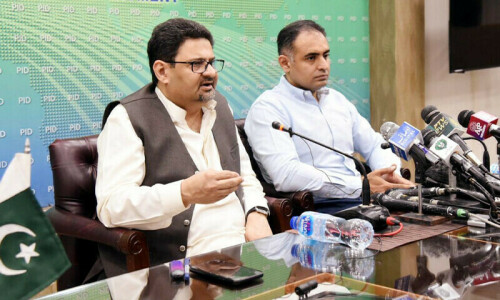
Days after Finance Minister Miftah Ismail withdrew a new fixed tax on retailers consuming up to 150 units of electricity a month, he was forced by PML-N vice president Maryam Nawaz to do away with the new regime for the entire retail sector to protect the interests of the party’s core constituency in Punjab.
Wholesalers and retailers constitute 19pc of the economy but pay a paltry Rs6bn in taxes.
The fixed tax regime was introduced in the 2022-23 budget on traders’ electricity consumption to raise their contribution to Rs42bn and document the economy.
It isn’t the first time that a government has succumbed to pressure from the retailers. In fact, this unfair move has drawn valid criticism as it coincides with the drastic increase in income tax on salaried people and corporates as the government endeavours to meet IMF-mandated revenue targets.
The fixed tax regime in itself was a major concession to traders since it represented the ‘full and final settlement’ of their income tax and GST liability.
Read: Putting the squeeze on everyone’s income, in every sector
Mr Ismail says its withdrawal will cause a revenue loss of ‘just’ Rs7bn as he plans to increase traders’ contribution to Rs34bn by revising up their income tax and sales tax rates under the old tax regime. Yet, many believe, correctly, that those already paying their share of taxes will end up paying even more to make up for the revenue loss.
The unfairness built into our tax system is the main factor holding our tax-to-GDP ratio at 9.2pc, one of the lowest globally, causing successive governments to accumulate huge fiscal deficits and massive debt, besides creating distortions in the economy.
Despite pledges made by various administrations, no government has been able to expand the tax net and boost the country’s tax-to-GDP ratio due to the political clout wielded by untaxed and undertaxed sectors like retailers. Instead, the share of indirect taxes has drastically been increased while spiking the tax burden for existing taxpayers to meet the state’s ever-increasing revenue requirements.
It is time for a government grappling with an unprecedented economic crisis to realise that business as usual will not fix its fiscal problems; whether it likes it or not, milking those who are already paying taxes will no longer help.
Published in Dawn, August 8th, 2022