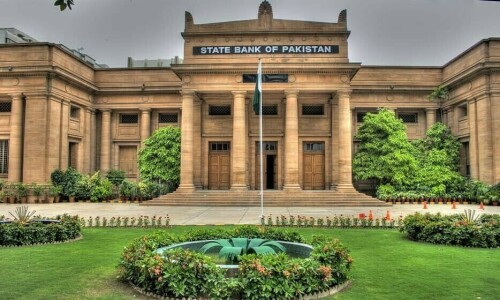
PAKISTAN’S foreign exchange reserves have dropped to a nearly four-year low of $6.7bn — just about enough to cover four to five weeks of imports, according to the State Bank’s numbers released on Thursday.
The same day, the SBP governor, Jameel Ahmad, said in a podcast that all debt repayments are on track and foreign exchange reserves are expected to increase in the second half of the current fiscal as he spoke of Pakistan’s capacity to meet its international financial obligations.
The aim was to address widespread market concerns over external account vulnerabilities. With net foreign reserves held by commercial banks at $5.87bn, Pakistan’s total liquid foreign reserves are now nearly $12.6bn.
The SBP attributed the drop to the $1bn payment it made against the maturity of Sukuk bonds. The SBP chief gave details of Pakistan’s financing needs for the current fiscal, the loan amounts rolled over by China and Saudi Arabia, debt repayments, likely dollar inflows from bilateral and commercial creditors, etc.
In short, he tried to reassure the markets that Pakistan no longer faces the risk of default. True, if everything goes according to the SBP script we will meet our external debt repayment obligations this year. But, what happens in the next fiscal and after?
The economy may not be facing the risk of imminent default but it now depends heavily on the largesse of friendly countries for survival. The amount of dollars we have in the kitty and the sum we are expecting in loans or deposits over the next few months are no longer relevant.
That we still have reserves equivalent to a month of imports is because our friends are not asking us to return their deposits worth around $10bn. Also, we have placed stringent curbs on foreign purchases to curtail import expenditure.
Not only that, the central bank has made the repatriation of dividends and other earnings of foreign firms near impossible in order to prevent its reserves from disappearing.
According to the International Air Transport Association, we are among the top five countries to have restricted foreign airlines from repatriating their ticket sales revenues amounting to $225m.
The unfortunate thing is that we as a nation are not ready to accept the reality and continue to live beyond our means. Political compulsions mean that the government has its head buried in the sand. We are not prepared to reduce our consumption of expensive imported oil or put up with a few hours of blackouts or close shops before sunset.
Unless the authorities give a realistic picture of the economy, without sugar-coating any aspect, how can they ask citizens to tighten their belts? Instead of challenging the IMF for telling us to put our house in order, we must take a hard look at our situation and brace for painful adjustments. There is no easy way out of the current economic mess.
Published in Dawn, December 10th, 2022