Three years on, WHO says Covid still global emergency


Three years to the day after the World Health Organisation (WHO) sounded the highest level of global alert over Covid-19, it said on Monday the pandemic remains an international emergency.
WHO Director General Tedros Adhanom Ghebreyesus reached that conclusion following the recommendations of the United Nations health agency’s emergency committee, which on Friday held its 14th meeting since the start of the crisis.
The WHO first declared a so-called public health emergency of international concern (PHEIC) — its highest possible level of global alert — on January 30, 2020, over what was then called the novel coronavirus.
When it sounded the alarm, fewer than 100 cases and no deaths had been detected outside China.
Since then, more than 752 million confirmed cases of Covid-19 have been reported to the WHO, including more than 6.8 million deaths, though the true numbers are thought to be far higher.
Addressing the WHO’s executive board in Geneva on Monday, Tedros acknowledged that “as we enter the fourth year of the pandemic, there is no doubt we are in a far better situation now than we were a year ago, when the Omicron wave was at its peak”.
But, he added, “since the beginning of December, weekly reported deaths have been rising”.
“In the past eight weeks, more than 170,000 people have lost their lives to Covid-19.”
‘Transition point’
Weekly death rates had dropped from more than 70,000 per week at the start of 2022 to below 10,000 in October.
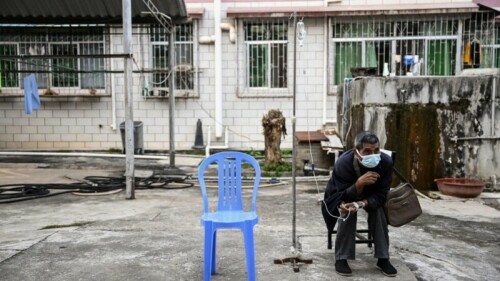
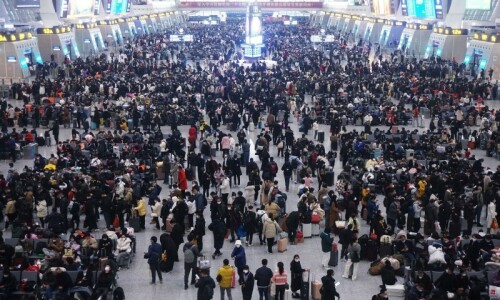
But they began swiftly rising again in early December, driven especially by a dramatic outbreak in China, after Beijing lifted its tight Covid restrictions.
In mid-January, almost 40,000 Covid weekly deaths were reported — more than half of them in China.
Back in 2020, when the global crisis was also concentrated in China, WHO’s declaration of a PHEIC failed to elicit the urgent global response required.
It was only after Tedros described the worsening Covid situation as a pandemic on March 11, 2020, that many countries realised the danger.
Three years later, WHO said on Monday that the emergency committee deemed the pandemic is “probably at a transition point”.
Tedros “appreciates the advice of the committee to navigate this transition carefully and mitigate the potential negative consequences”, it said.
But Tedros reiterated his concern over a dramatic drop in surveillance of the virus through testing and sequencing.
He also voiced disappointment that many vulnerable people remain un- or under-vaccinated and lack access to the drugs needed to treat severe Covid disease.
“We can’t control the virus but we can do more to address the vulnerabilities in populations and health systems,” he said.
“That means vaccinating 100 per cent of the most at-risk groups. It means increasing access to testing and early antiviral use.”
Monday’s decision came as the International Federation of the Red Cross (IFRC) warned that the world remained “dangerously unprepared” for the next crisis.
“The Covid-19 pandemic should be a wake-up call for the global community to prepare now for the next health crisis,” said IFRC secretary general Jagan Chapagain.
“The next pandemic could be just around the corner,” he warned. “If the experience of Covid-19 won’t quicken our steps toward preparedness, what will?”