The IMF mission has been in Islamabad since Jan 31 to complete the stalled technical and policy-level talks aimed at extricating Pakistan from its present foreign exchange crisis. Yet the lender of last resort does not appear to be in a mood to soften the conditions attached to the loan.
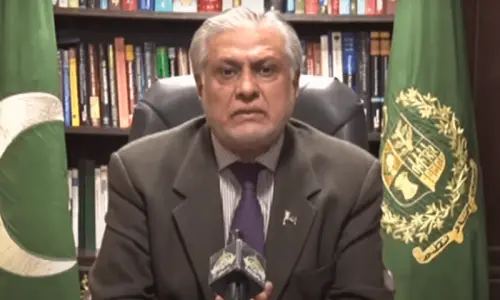
Desperate for IMF dollars and relief from the crisis, it is not surprising that the Fund’s tough stance compelled Prime Minister Shehbaz Sharif to admit on Friday that the lender was giving Finance Minister Ishaq Dar and his team a hard time in negotiations. His remarks caused the rupee and bonds to tumble. Fears were raised that the IMF team’s presence in the capital would not culminate in a staff-level agreement and the disbursement of the $1.3bn tranche, as the State Bank’s foreign exchange reserves dropped to just over $3bn — enough to cover essential imports for only 18 days.
Mr Sharif rightly told the apex committee meeting on terrorism in Peshawar that Pakistan’s economic crisis was inconceivable and that the IMF’s conditions were “beyond imagination”. He was also correct in acknowledging that the country had no choice but to implement them. His remarks underline the huge stakes involved as the country goes through one of its worst economic crises in decades. Pakistan needs to complete the review to stave off a default as well as to unlock inflows from other multilateral and bilateral lenders.
It is not hard to imagine the desperation being felt by the finance minister and his team, considering the IMF mission chief Nathan Porter’s reported position regarding the need for Pakistan to take upfront, calibrated and strong measures to bridge the daunting fiscal gap estimated to be between Rs2tr and Rs2.5tr.
Some of the conditions, such as the removal of power subsidy for lifeline electricity consumers, may appear uncalled for and prove politically suicidal for the PML-N-led coalition. But Mr Dar must be reminded that he has only himself to blame for the fix he has found himself in. Had he avoided needless confrontation with the Fund and diligently pursued the programme agreed on by his predecessor after months of hard work, in the hope of replacing the lender with ‘friendly countries’, the situation may not have been so desperate today, and the Washington-based creditor would not have put new, politically unpalatable conditions on the table.
The more grievous consequences of what Mr Dar has done — or not done — over the past four months will have to be borne by the public that is already struggling to cope with soaring price inflation and job cuts. On top of that, he was also unable to protect the political capital of his party, the primary reason for which he was sent back from London to take over the finance ministry.
Published in Dawn, February 5th, 2023