UNTIL September, Manchhar Lake was brimming with floodwaters from Balochistan and upper Sindh. Raging water flows were entering it unabatedly. After showing resilience to floodwaters for a few months, the lake was calm and offered a soothing look in November. Fishermen living on its bank and boathouses were going deep inside the lake for a decent catch as massive fish spawn has swept into the lake with gushing floodwaters.
Sindh — where farmers were crying for availability of irrigation water until May-June for kharif crops’ sowing — witnessed a disaster of epic proportions in August-September as massive floods wrought havoc across the province.
Manchhar had to be drained lest its banks burst due to massive quantum of floodwater. This writer witnessed an ocean of humanity, in the wake of back to back cuts, moving on Indus River’s Larkana-Sehwan (LS) dyke with their herds of livestock. People including men, women and children, walked in pitch darkness after announcements were made that the waters would flood villages. Completely panicked, they left their villages with whatever belongings they could lay their hands on to shift to safer abodes.
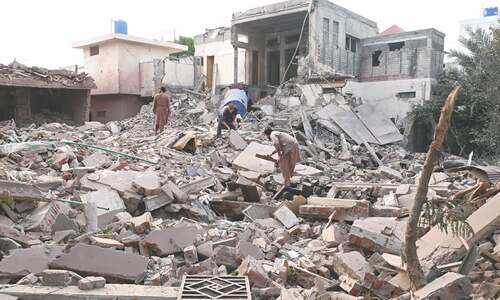
In the summer of 2022, Sindh witnessed manifest misery, death and destruction. Torrential rains starting in July continued until the last week of August. According to Pakistan Meteorological Department, Padidan, a small town of Naushahro Feroze, recorded the highest rainfall this season of 1,763.9mm during July-August and 1,228.5m in August alone. Sindh had 245mm of rainfall in July against 60.1mm average rainfall and 443mm against 53mm average rains in August 2022.
Standing cotton crop and vegetables, particularly onion and tomato, were washed away besides enormous losses to the kharif rice crop. Among fruits it was ready to harvest date palm crop that was 90pc destroyed in Khairpur.
Sindh Abadgar Board, a growers’ body, also assessed losses to farm sector considering economic value of crops, major and minor, swept away. “I think cumulative loss in farm and livestock sectors is Rs700bn. Cotton being sensitive was almost completely gone followed by serious damage to rice, an exportable commodity. It is only sugarcane that survived vagaries of nature although losses to it are there too”, contended Mahmood Nawaz Shah, SAB vice president. He feared 80pc wheat sowing could be achieved as large swathes of land are still under water.
Devastating spells of rain, best described by the visiting UN secretary general as a ‘monsoon on steroids’, coupled with floodwaters triggered massive displacement. Improvised or makeshift camps dotted the rural landscape and sections of the National and Indus highways where men, women and children stayed in subhuman conditions. Provincial Disaster Management Authority (PDMA) Sindh Director General Salman Shah had put figures of displaced population at 7.3m people or 1.2m households. Of them, 673,000 ended up in camps.
The situation had become critical in upper and lower Sindh due to flooding, both rural and urban, in major districts and to quote Sindh Chief Minister Syed Murad Ali Shah, floodwater from Balochistan that reached Sindh was equal to the capacity of six Tarbela Dams’ storage. The 2022 floods had reminded many of the scale of the disaster seen in the 2010 ‘super floods’ in seven right-bank districts of upper Sindh and then 2011 and 2020 downpours in lower Sindh’s left-bank districts. The 2010 super floods had caused displacement of around 7m people.
People, including from Balochistan, again ended up in tent cities and relief camps in Sindh. They, however, faced healthcare and hygiene issues. Moreover, the dysfunctional drainage system for dewatering purposes was another major concern. The drainage system of Sindh collapsed due to maximum discharges along right and left banks of the Indus, which was more than the 2010 super floods’ flows. A quantum of 0.6m cusecs passed Kotri Barrage downstream into the sea.
“Sindh’s total losses are estimated at $7.5bn including $500m of housing, $500m of irrigation sector and roads,” remarked Sindh Chief Secretary Dr Mohammad Sohail Rajput.
Published in Dawn Yearender, January 1, 2023