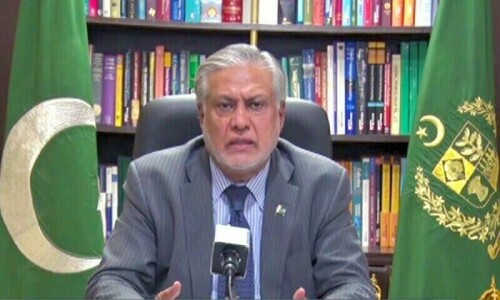
Saudi Arabia will invest up to $25 billion in Pakistan over the next two to five years in various sectors, caretaker Prime Minister Anwaarul Haq Kakar said on Monday, adding his government would also revive a stalled privatisation process.
The country is embarking on a tricky path to economic recovery under a caretaker government after a $3bn loan programme, approved by the International Monetary Fund (IMF) in July, averted a sovereign debt default.
Kakar, speaking to journalists at his official residence, said Saudi Arabia’s investment would come in the mining, agriculture and information technology sectors, and was part of a push to increase foreign direct investment in Pakistan.
There was no immediate response to a Reuters request to the Saudi Arabian government for comment on the premier’s remarks.
If confirmed, a series of investments worth $25bn would be the biggest ever by the kingdom in Pakistan.
A longtime ally of Riyadh, Pakistan is dealing with a balance of payments crisis and requires billions of dollars in foreign exchange to finance its trade deficit and repay its international debts in the current financial year.
The prime minister did not specify projects Riyadh was looking at for investment, but last month Barrick Gold Corp said it was open to bringing in Saudi Arabia’s wealth fund as one of its partners in Pakistan’s Reko Diq gold and copper mine.
Pakistan’s untapped mineral deposits are conservatively valued at about $6 trillion, said Kakar, whose government is meant to be an interim set up to oversee national elections scheduled for November but are expected to be delayed by months.
Barrick considers the Reko Diq mine one of the world’s largest underdeveloped copper-gold areas and it owns a 50 per cent stake, with the remaining 50pc owned by the federal government and Balochistan’s provincial government.
The premier also said his government would push to complete two privatisation deals, probably for state-run power sector entities, in the next six months, and would also look to privatise another government-owned enterprise outside the energy sector.
The country’s state-owned enterprises have long been an area of concern with bleeding financials adding to financial stress. Recently, Pakistan added struggling state-run Pakistan International Airlines to the privatisation list again.
The privatisation process has largely stalled in the country with the selling of state assets a politically sensitive issue that many elected governments have shied away from.