G20 gathers in India with China’s President Xi absent


G20 leaders descended on New Delhi on Friday, with deep divisions between heavyweight members and Chinese President Xi Jinping’s no-show calling the bloc’s relevance into question.
The G20 was conceived in the throes of the 2008 financial crisis as a way of managing the global economy.
However, finding consensus among members has been increasingly difficult in recent years.
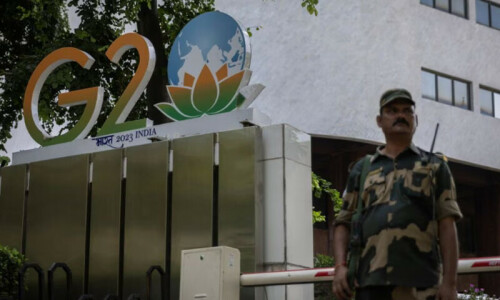
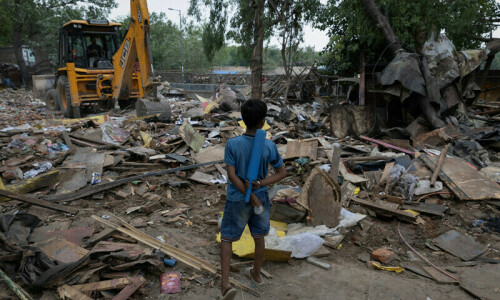
With several leaders already in New Delhi — spruced up and partly emptied of people for the occasion — hosts India were scrambling for agreement on pressing issues like the Ukraine war, climate and global governance.
Indian Prime Minister Narendra Modi has painted the summit as his country’s diplomatic coming of age — evidence of New Delhi’s clout and prestige on the global stage.
But that notion was called into question by rival leader Xi, who pointedly decided to skip the meeting and send his number two, Premier Li Qiang, instead.
No official reason was given for the absence, but Xi has chastised Modi about a deadly China-India border dispute and been open about making US-led groupings like the G20 more amenable to Beijing’s interests.
As the summit takes place, Xi will host the leaders of Venezuela and Zambia in Beijing.
Modi — sensing an opportunity to burnish his credentials as a statesman ahead of a re-election tilt early next year — has thrust himself front and centre of proceedings.
His image adorns countless G20 billboards and posters plastered around Delhi.
A failure of G20 leaders to agree on a joint summit statement, a usually routine diplomatic affair, could be seen as an embarrassment for India and for Modi’s claim of uniting developing and richer members.
Modi looks set to secure at least one concrete step in that direction — with several leaders expressing support for expanding the bloc into the “G21” and including the African Union as a permanent member.
But elsewhere, Ukraine appears to be a key sticking point, and who pays for efforts to heal the world’s rapidly heating climate.
“Have a little bit of patience,” senior Indian diplomat Amitabh Kant said today, insisting that a text would be put to leaders for them to decide.
Diplomatic opprobrium and war crimes charges are also keeping Russian leader Vladimir Putin away from the summit, although Moscow continues to press allies to water down international condemnation of its invasion of Ukraine.
“Once again, Vladimir Putin is failing to show his face at the G20,” said British Prime Minister Rishi Sunak.
“He is the architect of his own diplomatic exile, isolating himself in his presidential palace and blocking out criticism and reality.
“The rest of the G20, meanwhile, are demonstrating that we will turn up and work together to pick up the pieces of Putin’s destruction.”
‘Monitoring carefully’
Heading to the summit, US President Joe Biden also insisted that the meeting would still “deliver”, even as markets fretted that a trade war between the world’s two largest economies was poised to escalate.
Rumours have swirled that China may be poised to ban Apple’s ubiquitous iPhone.
US National Security Adviser Jake Sullivan, speaking on Air Force One bound for the summit, parried queries about those rumours.
Questions such as “what’s motivating them, what the scope of this will be, and what they think the net effect of that will be” were for Beijing to answer, he said.
Many G20 leaders fear their economies are already at risk of being collateral damage as the big beasts of world trade lock horns.
Economists say US restrictions on the transfer of sensitive technologies to China have deepened a slowdown in the world’s second-largest economy.
They also point, however, to serious structural problems in China such as a shrinking labour force, slower productivity and an overheated real estate market.
Speaking in Delhi on Friday, US Treasury Secretary Janet Yellen warned a Chinese slowdown carried risks for the entire globe.
“China faces a variety of both short and longer-term global challenges, economic challenges that we’ve been monitoring carefully,” she said.
“That said, China has quite a bit of policy space to address these challenges”.