MUHAMMAD Khalid Jamil, bureau chief ABN News Islamabad, was arrested and charged under Section 20 of the Prevention of Electronic Crimes Act, 2016 (Peca) along with Section 505 of the Pakistan Penal Code. The complaint was made by a technical assistant at FIA Islamabad, accusing Jamil of disseminating an “anti-state narrative by sharing false misleading and baseless information” through his social media posts on X (formerly Twitter).
Since 2017, journalists critical of state excesses and policies have routinely been targeted using Section 20. Jamil’s case follows the same pattern. But what’s alarming is the use of Section 20 in the ICT jurisdiction after the Islamabad High Court (IHC) struck down the “harm to reputation” portion of it and bound FIA to follow certain procedures, especially in cases against journalists.
The language of Section 20 requires the complainant to be a “natural person” who is the aggrieved party. However, in such cases, it is usually a law-enforcement (LEA) officer or random third party, who operationalises this section of the law. Despite it being a non-cognisable offence, Section 20 routinely features in FIRs against journalists. Peca Rule 7(5) requires an investigation officer to seek the permission of the competent court for investigation under Section 155 of the CrPC. While the FIA is required to do this for Section 20, it does not. Instead, FIRs are registered using cognisable sections alongside Section 20, to gain powers to arrest.
Section 33 of Peca lays down the requirement for warrants to conduct search and seizure. Peca Rule 8 re-emphasises the requirement for warrants and for a proper chain of custody to be maintained. This too is not done. Instead, individuals are arrested, their devices are seized, they are coerced into providing their passwords — in breach of Article 13 of the Constitution which protects against self-incrimination — to gain access to devices and social media accounts. And if passwords aren’t divulged, then other illegal methods are used to pry entry. Section 34 of Peca requires a warrant for the disclosure of content data. This also exists merely on paper.
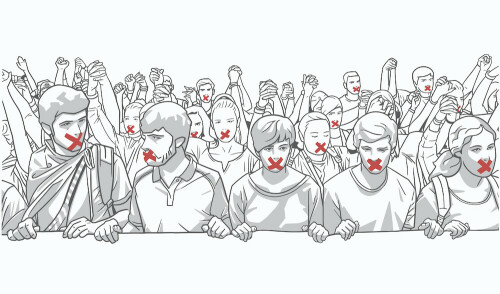
Journalists critical of the state have routinely been targeted.
Not only is the letter of the law violated so blatantly, but the person implicated is then condemned to the motions of ‘the law’ even though the offence is not made out. Process is punishment. But this is not about the law, it’s about impunity. By now the abuse under Peca is well documented. That the application of Section 20 is illegal stands established in jurisprudence. Yet LEAs are able to repeat their illegal acts as there exists complete impunity in the absence of rule of law and accountability.
What also requires scrutiny is the judicial practice of remanding citizens into police —in this case, FIA — custody. What can’t be investigated after the grant of bail? Aren’t investigations conducted into non-cognisable offences? Condemning people into LEA custody in what are blatantly politically motivated and illegal cases only serve as a pressure tactic to silence them and warn others. What is the purpose of seizing devices and conducting forensics when the basis of booking someone is a tweet or remarks in the public domain? Especially when the person doesn’t deny making the remarks or posting the content. The purpose then is simply to extract information coercively to use for leverage and blackmail.
Consistent today in political cases is the concealment of FIRs, arbitrary cancellation and postponement of bail hearings. When bail is granted, the same individuals are rearrested in fresh cases the minute they step out of jail. Protection orders are issued by high courts but violated with impunity. Contempt applications are filed but amount to little by way of deterrence or accountability. In the trampling of fundamental rights, the writ of the courts also stands challenged.
While courts occasionally provide relief in the few odd cases before them, constitutional courts need to do more than just deal with the case at hand. They need to lay down precedents that extend broader protections and hold to account all those within the state apparatus, who abuse the law.
The Islamabad High Court struck down the PTI ordinance expanding the ambit of Section 20 and the “harm to reputation” part of the 2016 version of the law introduced by the PML-N, but the “false information” portion was left intact. Separately, the Lahore High Court declared all of Section 20 to be constitutional. An appeal against the LHC order was filed before the Supreme Court (SC) and proceedings in the case were stayed. The case has yet to proceed further.
Now is the time to turn to the SC to settle the Section 20 question and, along with it, the wider abuse under Peca and the consistent infringement of due process and freedom of expression.
The writer is a co-founder of Bolo Bhi, an advocacy forum for digital rights.
Published in Dawn, September 28th, 2023