ISLAMABAD: Pakistan was among the nations impacted by “an out of balance” hydrological cycle due to climate change in 2022, the World Meteorological Organisation said on Thursday and called for a fundamental policy shift towards better monitoring.
The ‘State of Global Water Resources 2022 Report’ published by the WMO said over 50 per cent of the global catchment areas experienced deviations from normal river discharge conditions in 2022. Most of these areas were drier than normal, while a smaller percentage of basins displayed above or much above normal conditions.
The Third Pole, encompassing the Tibetan Plateau, the Himalayas, the Karakorum, the Hindu Kush, the Pamirs, and the Tien Shan Mountains, is vital for almost two billion people’s water supply. From 2000 to 2018, the total glacier mass balance decreased by more than 4pc.
There has been a notable decrease in snow cover and a big increase in the volume of glacial lakes.
WMO says hydrology fluctuating between extremes due to climate change
This has impacted river runoffs at the Indus, Amu Darya, Yangtze and Yellow River basins, indicating climate change’s evolving influence on the region.
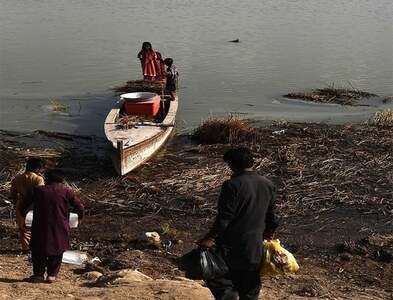
On the other hand, a megaflood hit the Indus River Basin in Pakistan, killing at least 1,700, affecting 33 million and causing an estimated $30 billion in economic losses.
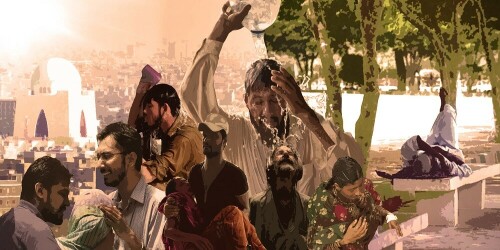
A heatwave early in the year increased meltwater from glaciers, increasing river levels, which were then swelled by severe monsoon rainfall, more than twice the average in July and August.
The report said throughout 2022, anomalies in soil moisture and evaporation impacted the river discharge conditions. Europe saw increased evaporation and decreased soil moisture and river flows during the summer because of a major heatwave and drought.
Severe droughts impacted many parts of Europe, posing transportation challenges in rivers like the Danube and Rhine and disrupting nuclear electricity production in France due to the lack of cooling water. The extremely low water levels affected navigation on the Mississippi River in the US due to a continuous drought.
‘Spinning out of balance’
The hydrological cycle is spinning out of balance as a result of climate change and human activities, according to the report.
Droughts and extreme rainfall events are wreaking a heavy toll on lives and economies. Melting snow, ice and glaciers have increased hazards like floods and threaten long-term water security for many millions of people.
“We are seeing much heavier precipitation episodes and flooding. And at the opposite extreme, more evaporation, dry soils and more intense droughts,” said WMO Secretary-General Petteri Taalas in a statement.
There must be improved monitoring, data-sharing, cross-border collaboration and assessments of water resources — and an accompanying increase in investments to facilitate this, the report added.
“This is vital to help society cope with increasing water extremes of too much or too little.”
Lack of data
The report highlighted the lack of accessible verified hydrological data. Africa, the Middle East and Asia, in particular, have too little available observational data.
“…Far too little is known about the true state of the world’s freshwater resources. We cannot manage what we do not measure,” the WMO said in a statement.
There is an urgent need for investments in monitoring and data sharing in accordance with the ‘WMO Unified Data Policy’.
“The overwhelming majority of disasters are water-related, and so water management and monitoring lies at the heart of the global ‘Early Warnings For All’ initiative,” added Mr Taalas.
“Many of the countries targeted for priority action in Early Warnings for All suffered from major floods or droughts in 2022. Not a single country had timely and accurate hydrological data available to support evidence-based decision making and early action.”
According to UN estimates, currently, 3.6bn people face inadequate access to water at least a month per year. The number is expected to increase to more than 5bn by 2050.
Published in Dawn, October 13th, 2023