• Region may face water shortage, flash floods, GLOF events, disruption to agriculture
• Data shows temperature rises 0.5 degrees Celsius on average in past 30 years
GILGIT: A prolonged dry weather and the lack of expected snowfall in Gilgit-Baltistan this season have raised the spectre of potential calamities, including water shortage, flash floods, glacial lake outburst floods (GLOF), and disruption to agriculture and the natural ecosystem.
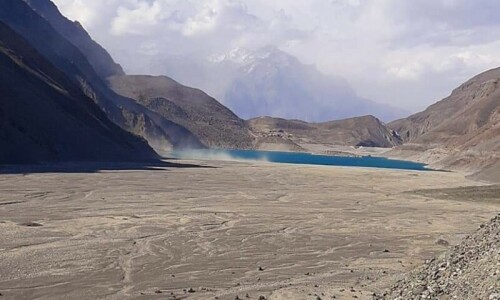
Traditionally, Gilgit-Baltistan witnesses its snow season from December to January. This year, however, is different, with the normally snow-capped areas and mountains looking barren, sparking concerns for the local communities, particularly those living downstream of the Indus River.
Subkhan Sohail, a resident of Astore, told Dawn the district typically receives heavy snowfall in winter, with upper regions accumulating six to eight inches of snow and lower areas, including the district headquarters, receiving one to six inches.
This year’s deviation from the norm has raised fears of water shortages, as the inhabitants rely heavily on glacier water for drinking, agriculture, and power generation.
The lack of snowfall not only threatens the water supply but also poses risks for agriculture. Abbas Ali, another local from Nagar, told Dawn that this prolonged dry weather is a first for the region.
The unusually warm temperatures this winter have further exacerbated concerns, leading to a delay in winter sports events, including ski competitions.
Muhammad Ali, a winter sports expert, said he planned to organise a ski event in Nagar’s Bartar area, but the snowfall shortage has rendered it impossible. “This is unprecedented,” he said.
Shahzad Shigri, director of the Gilgit-Baltistan Environmental Protection Agency (GBEPA), said the situation was alarming.
He emphasised the region’s vulnerability to climate change and its sensitivity to environmental shifts. The lack of snowfall could lead to GLOFs and flash floods and adversely affect the agricultural system. Mr Shigri explained that snowfall typically received in February becomes unstable, leading to abrupt melting and resultant flash floods and GLOF events.
Gilgit-Baltistan, known as the water tower of Pakistan, plays a crucial role in feeding the Indus River, which is pivotal for 70 per cent of Pakistan’s agriculture and 40pc of its hydropower, he said. The current situation, therefore, not only affects Gilgit-Baltistan but also has the potential to impact areas downstream of the Indus River.
The GBEPA’s data, spanning 30 years, shows an average annual temperature rise of 0.5 degrees Celsius and a decrease in precipitation by 8.5mm per year in the region. This shift in climate patterns has led to sporadic events like intense downpours, droughts, and rapid melting of snow and glaciers, all adversely affecting the residents.
The frequency and intensity of such events are expected to increase, posing significant challenges to both immediate and long-term developmental goals in the region.
Published in Dawn, January 21st, 2024