India court allows Hindus to pray inside disputed mosque in Varanasi


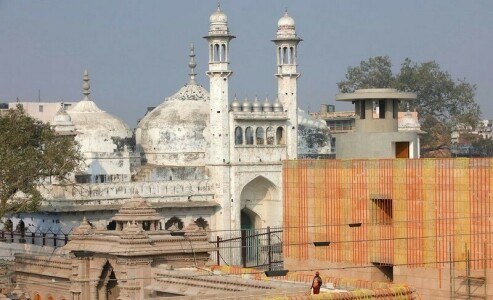
An Indian court weighed in on one of the country’s most sensitive religious disputes on Wednesday by permitting Hindu worshippers to pray inside a mosque in the city of Varanasi.
The Gyanvapi mosque is one of several Islamic houses of worship that Hindu activists, backed by Prime Minister Narendra Modi’s party, have sought for decades to reclaim for their religion.
It was built in the 17th century by the Mughal Empire in a city where Hindu faithful from across the country cremate their loved ones by the Ganges river.
The court in Varanasi ruled that Hindu worshippers — who believe the mosque replaced a destroyed temple to the deity Shiva — could pray in the building’s basement.
Its verdict ordered district authorities to “make proper arrangements within the next seven days” to facilitate worshippers.
The decision is the latest in a long-running legal saga over Gyanvapi’s future.
This month, India’s official archaeological agency said a survey of the site appeared to corroborate the belief that it was originally home to a temple, according to local news reports.
Emboldened right-wing Hindu groups have laid claim to several Muslim sites of worship they say were built atop ancient temples during Mughal rule.
Last week, Modi presided over a grand inauguration ceremony in the nearby city of Ayodhya for a Hindu temple built on grounds once home to the centuries-old Babri mosque.
Hindu zealots had torn down that mosque in 1992 in a campaign spearheaded by members of Modi’s party, sparking sectarian riots that killed 2,000 people nationwide, most of them Muslims.
The decades-long court battle that ensued over the future of the Babri site ended in 2019 when India’s top court permitted the construction of a temple to the deity Ram, who according to Hindu scripture was born in the city.
Members of Modi’s party routinely refer to India’s history of Muslim rule under the Mughal emperors as a time of “slavery”.
The prime minister described last week’s opening of the temple as “the advent of a new era”.
Calls for India to enshrine Hindu supremacy have rapidly grown louder since Modi took office in 2014, making its roughly 210-million-strong Muslim minority increasingly anxious about their future.