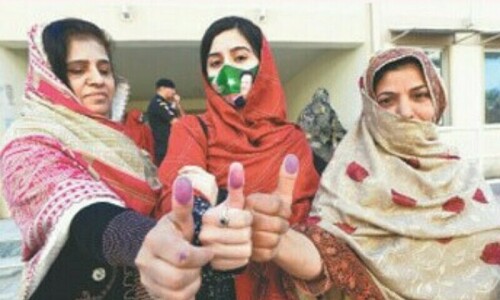
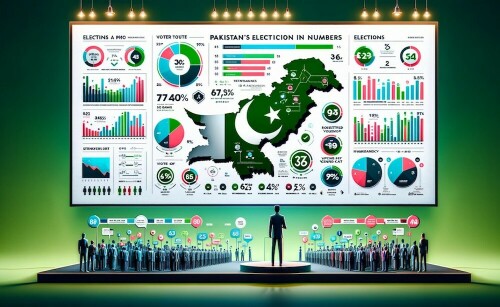
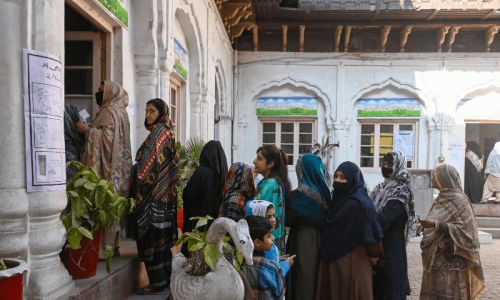
People were determined to vote in the 2024 elections. However, despite the increase in absolute terms, voter turnout dipped in terms of percentage. Harsh winter in parts of the country, fears of violence and terrorism in KP and Balochistan, as well as uncertainty about the conduct of elections, may have also adversely affected the turnout, states an analysis by the Free & Fair Election Network (Fafen).
Voter turnout has decreased since the 2013 elections, though it is higher than what it was in the 1980s and the 1990s. (The 1990s saw the musical chair of the Bhutto and Sharif family, though the bitter rivalry then could not have foreseen the coalition government today.)
The percentage of youths as voters has increased, and so has awareness through social media and the internet. It may account for a higher absolute voter turnout increase in the recent elections.
Research suggests that a poor economy may depress voter participation in some countries, hence under-penalising incumbents for bad economic performance. Other streams of research have contrary views that argue that a worsening economy has a disruptive effect that prods worried citizens to voice concerns and seek remedies. Among economic indicators, empirical data suggests that high unemployment rates stimulate more people to vote in countries like the US.
Nor are the decisions made in a vacuum. While the country teetered on the verge of default, Pakistan’s rival received international accolades based on economic might. One stream of research suggests that voters compare their nation’s economy with the economies of other countries.
A paper that compared 29 democracies since the 1980s found that a poor relative economy led to lower turnout, while a good relative economy appeared to have no effect, indicating that good performance can be overlooked but a bad performance cannot.
Of course, in Pakistan, the turnout on election day, as well as the election results, are strongly influenced by the powers-that-be. The sentiments of the people, be it the assassination of popular leaders or their incarceration, sway the people more than economic miseries.
Published in Dawn, The Business and Finance Weekly, February 26th, 2024