Tensions flare at US universities over Gaza protests


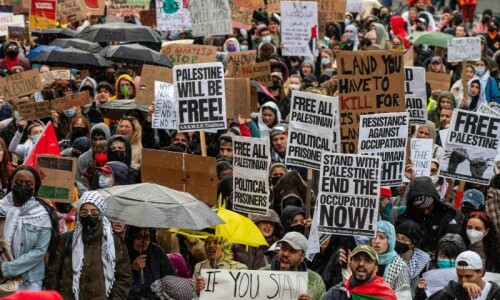
Tensions flared between pro-Palestinian student protesters and school administrators at several US universities on Monday, as in-person classes were cancelled and demonstrators arrested.
The protests, which began last week at Columbia University with a large group of demonstrators establishing a “Gaza Solidarity Encampment” on school grounds, have spread to other campuses, including Yale, MIT and others.
Some Jewish students at Columbia have reported intimidation and anti-Semitism amid the days-long protest, which is calling for the prestigious New York institution to divest from companies with ties to Israel.
Classes were moved online on Monday, with university president Nemat Shafik calling for a “reset” in an open letter to the school community.
“Over the past days, there have been too many examples of intimidating and harassing behavior on our campus,” she said.
“Anti-Semitic language, like any other language that is used to hurt and frighten people, is unacceptable and appropriate action will be taken.
“To de-escalate the rancor and give us all a chance to consider next steps, I am announcing that all classes will be held virtually on Monday,” she added.
Last week, more than 100 protesters were arrested after university authorities called the police onto the private campus Thursday, a move that seemingly escalated tensions and sparked a greater turnout over the weekend.
Mimi Elias, a social work student who was arrested, told AFP on Monday: “We are going to stay until they talk to us and listen to our demands.
“We don’t want anti-Semitism or Islamophobia. We are here for the liberation of all,” Elias said.
Joseph Howley, an associate professor of classics at Columbia, said the university had reached for the “wrong tool” by involving police, which had attracted “more radical elements that are not part of our student protests”.
“You can’t discipline and punish your way out of prejudice and community disagreement,” Howley told AFP.
Disciplinary action
As the holiday of Passover began on Monday night, social media images appeared to show pro-Palestinian Jewish students holding traditional seder meals inside the protest areas on multiple campuses, including at Columbia.
Further downtown, police began detaining protesters who had set up their own encampment at New York University at around 8:30pm, the New York Times reported, after the school called the students’ behavior “disorderly, disruptive, and antagonising”.
There were also demonstrations at MIT, the University of Michigan and Yale, where at least 47 people had been arrested on Monday after refusing requests to disperse.
“The university made the decision to arrest those individuals who would not leave the plaza with the safety and security of the entire Yale community in mind,” the Ivy League university said in a statement.
At Harvard, university officials on Monday suspended the Palestinian Solidarity Committee, the student group said on Instagram.
They were ordered to “cease all organisational activities” for the rest of the term, or risk permanent expulsion after holding an unregistered demonstration last week, student newspaper the Harvard Crimson reported, citing an email to the group.
Universities have become the focus of intense cultural debate in the United States since Hamas’ October 7 attack and Israel’s overwhelming military response, as a humanitarian crisis grips the Palestinian territory of Gaza.
US President Joe Biden on Monday said he condemned “the anti-Semitic protests”.
“I also condemn those who don’t understand what’s going on with the Palestinians,” he told reporters, without further details.