ISLAMABAD: Expressing concerns over increasing political polarisation in the country resulting in greater restrictions on civil and political rights, the Human Rights Commission of Pakistan (HRCP) has called for economic justice and protection of civil rights and emphasised on the importance of upholding democratic principles and the rule of law.
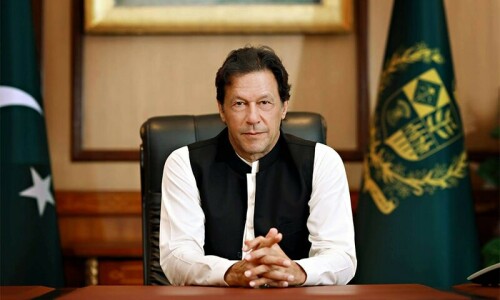
In its annual report “State of Human Rights 2023”, released here on Wednesday, the HRCP noted with deep concern that irreparable political divisions spilled over into public acts of arson and violence on May 9, 2023, following the arrest of former prime minister Imran Khan.
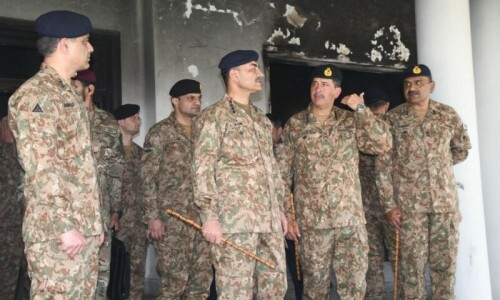
“What followed was flagrant disregard for the Constitution as unelected forces tightened their grip on the country’s democratic structures and civic spaces shrank to an all-time low,” says the report. The report says the state’s response to the May 9 riots was to quell dissent — to the extent of resurrecting military courts to try civilians, perpetrating enforced disappearances, ordering mass arrests and allegedly orchestrating public disassociation from the PTI among many senior party leaders.
According to the report, the right to freedom of expression and assembly took a particular hit during the year.
Calls for upholding democratic principles, rule of law
The general elections were also delayed well beyond the 90-day constitutional limit on various grounds, including the need for new delimitations on the basis of the recent census.
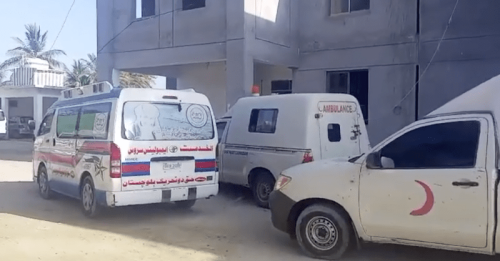
The rule of law, it says, was markedly poor, with a record six-year high in fatalities related to terrorist attacks and counter-terrorism operations and two militant attacks in Bajaur and Mastung, that collectively left at least 117 dead. The practice of extrajudicial killings continued, while street crime and the incidence of mob lynchings surged, says the report.
The report says that as in previous years, journalists, activists and political workers were subjected to enforced disappearances across the country. In an admirable show of strength, however, young Baloch women mobilised a long march from Turbat to Islamabad to protest against alleged extrajudicial killings and enforced disappearances.
Among vulnerable groups, religious minorities reported an increasing climate of fear, especially in the aftermath of an attack in Jaranwala, in which scores of churches and homes were torched and looted by mobs, following allegations of blasphemy against a Christian man.
In the wake of the federal government’s decision to expel undocumented foreigners, it says, Afghan nationals in particular were rounded up in police raids and sent to deportation centres with little to no legal recourse.
Speaking at the launch of the report, HRCP secretary-general Harris Khalique said the 2023 economic crisis had ‘pushed tens of millions of ordinary citizens to the brink of desperation.’
Commenting on the high incidence of enforced disappearances, he also deplored the role and performance of the Commission of Inquiry of Enforced Disappearances as ‘disgraceful.’
HRCP chairperson Asad Iqbal Butt said it was critical for the state to fulfill people’s right to education, livelihood and health.
Expressing concern over the low rate of trade unionisation, he said attempts to unionise workers were routinely met with harassment and intimidation.
Vice-chair HRCP Islamabad Nasreen Azhar said religion continued to be ‘weaponized for political purposes’.
Concluding the press conference, co-chair Munizae Jahangir said the state must protect the right to peaceful protest for all political parties and groups. She pointed out that repressive laws passed in one government’s tenure would return to haunt them when in opposition.
It called upon the government to take immediate steps to address the grievances outlined in the report and uphold the principles of democracy, justice, and human rights.
Published in Dawn, May 9th, 2024