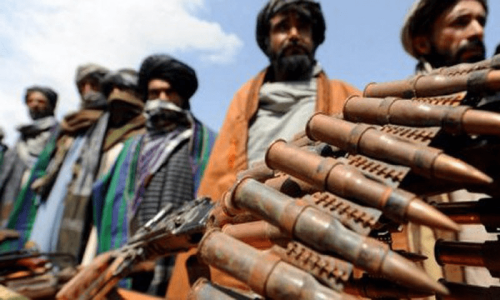
ISLAMABAD: Speakers at a discussion urged Pakistan to understand the nature of relationship of Taliban-led administration in Kabul with all Afghanistan-based militant groups before talking to it on the issue of banned Tehreek-i-Taliban Pakistan (TTP).
They said that Pakistan’s better know-how of emerging trends in Afghanistan and its militant landscape could help the former in resolving its own problem of terrorism effectively.
Academics, former diplomats, journalists, policy analysts and representatives of civil society expressed these views at the launching ceremony of the research report ‘Pakistan’s Evolving Militant Landscape: State Responses and Policy Options’.
The study conducted by Islamabad-based think-tank Pak Institute for Peace Studies (PIPS) provides an updated assessment of militant and security landscapes of Pakistan’s different regions, considering the influences of both domestic factors and the situation in Afghanistan.
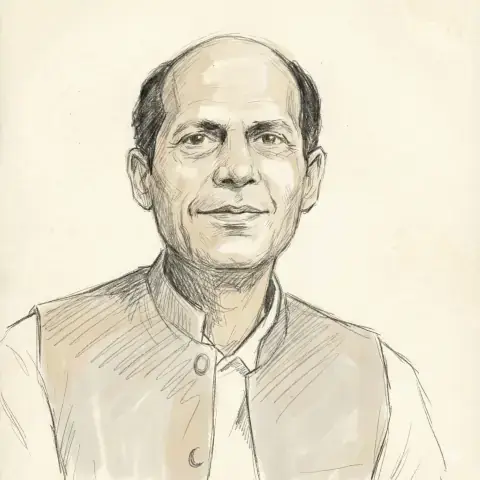
Former foreign secretary Inamul Haque speaking on the occasion as a chief guest said Pakistan should learn to treat Afghanistan as an independent country.
Inam underlined that a certain view was wrong that Pakistan should have hegemony over Afghanistan. Pakistan helped the Taliban for its own interests because “we had been trying to protect ourselves, our objectives and our own society, not necessarily the Taliban,” he added.
Senior journalist Ziaur Rehman viewed that Pakistan as a state had poor understanding of emerging trends in Afghanistan and its militant landscape – a situation that is playing a major role in the former’s ongoing conflict.
“We will have to understand the priorities of Taliban leadership before engaging them to get our terrorism problem resolved,” he said.
Mr Rehman said Islamabad would have to understand the nature of ties of the Taliban regime with all Afghanistan-based militant groups including the East Turkestan Islamic Movement (ETIM), the Islamic Movement of Uzbekistan (IMU) and the TTP.
He said Taliban viewed that these strong groups could join its rival Daesh if they took action against them on the desire of Pakistan and China, creating a new turmoil for the state of Afghanistan.
Chairperson of the Defence and Strategic Studies Department at the Quaid-i-Azam University (QAU) Dr Shabana Fayyaz questioned why Pakistan couldn’t have an “innovative, complex and sustainable” strategy on counterterrorism (CT) when it had a multifaceted militant landscape.
She said that female radicalisation was a big problem of Pakistan and talked about female seminaries operating in the country urging the need to engage them for deradicalisation.
QAU’s Associate Professor Dr Salma Malik said it was a major trend that Pakistan assessed its threat perception or primary threat of militancy through the lens of Afghanistan and the Taliban.
Expert on Afghan affairs Tahir Khan said that no one knew who was calling the shots in Pakistan as far as Afghan policy was concerned.
“Secondly, we don’t care for the sensitivities of the neighbouring country,” he said and talked about Pakistan’s “abrupt” decision to repatriate illegal Afghan refugees.
International Research Council for Religious Affairs (IRCRA) President Mohammad Israr Madani said Pakistan neither had capacity to handle TTP militants nor any deradicalisation programme to bring them into the mainstream.
“Negotiations with the (banned) TTP is the only way forward,” he said, adding that engaging local communities on both sides of the border for CT operations and negotiations would be very helpful for the government.
Pakistan Council on China Director Dr Fazalur Rahman stressed the need for “a comprehensive, an interconnected and wholesome approach” to tackle the problem of extremism and terrorism in Pakistan.
At the outset, Research Analyst Safdar Sial unveiled the key findings of the study.
Director PIPS Mohammad Amir Rana in his welcome remarks said that the institute had been working on the report and the whole initiative – including quarterly consultations, media monitoring and field research – for the last three years.
Published in Dawn, May 18th, 2024