KARACHI: The Taliban government has urged the world to lift the sanctions imposed on Afghanistan, even though the Kabul government fails to address global concerns over the grim situation of human rights and girls’ education in the country.
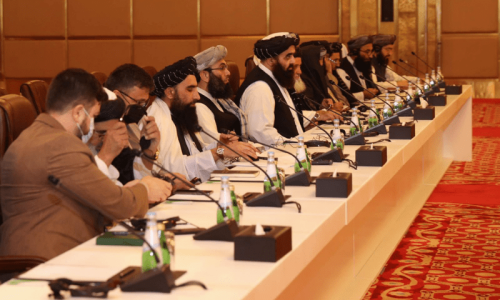
In his inaugural remarks at the Doha talks, Afghan Taliban spokesperson Zabihullah Mujahid, who is leading the delegation attending the Doha talks, said the process of easing financial and trade sanctions has been “slow”, leading to several challenges for the Afghan government and the private sector.
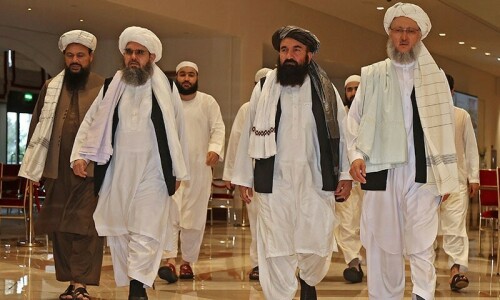
Ahead of the talks on Sunday, the delegation also met with representatives from the UN, Russia, Pakistan, India, Iran, Saudi Arabia, and Uzbekistan, according to the Afghan media and news agencies.
“Afghans … built a system aimed at fostering positive engagement with the world; however, in return, they faced sanctions and restrictions,” he said, while addressing the inaugural session of the two-day, UN-hosted meeting in Qatar.
Zabihullah skips mention of girls’ education, rights issues; meets envoys on sidelines of Doha talks
The discussion will focus on increasing international engagement with Afghanistan and a more coordinated response to the country’s economic issues and counter-narcotics efforts.
In his remarks, Mr Mujahid admitted that some countries “have problems” with the steps taken by the Afghan Taliban government since coming into power in 2021 but added that such “policy differences amid states are natural”.
“The policy differences should not escalate to the extent that powerful countries use their leverage to impose security, political, and economic pressures on our people, affecting the lives of our nation in a significant way.”
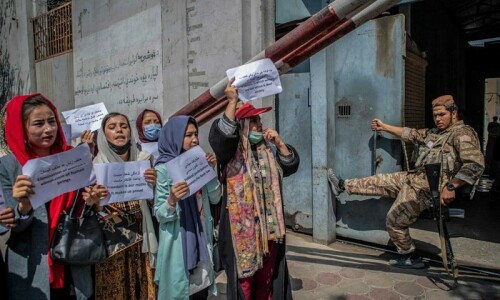
Since coming to power, the Taliban government has imposed a strict interpretation of Islam, with women subjected to laws characterised by the UN as “gender apartheid”.
These actions have attracted global condemnation, with the government in Kabul not being officially recognised by any other country.
The Taliban leader referred to these issues as “differences of opinion” adding that Kabul has “the will and commitment for positive interaction” and improving bilateral relationships.
Meeting
On the first of two days, the agenda of the meeting mostly included opening remarks and short discussions to build up for talks today (Monday) on reviving Afghanistan’s private sector and counter-narcotics strategy.
Ahead of the UN-hosted discussions, the government delegation held meetings in Doha with special envoys from Russia, India, Saudi Arabia and Uzbekistan, Mr Mujahid said on X, formerly Twitter.
While quoting Mr Mujahid, Tolo News reported that Saudi Arabia has expressed the willingness to reopen its embassy in Kabul as soon as possible.
UN officials and special representatives from over 20 countries, including Pakistan and the US, will also attend the meeting.
Pakistan’s Special Representative on Afghanistan Asif Durrani, met with his US counterpart, Tom West, on Sunday.
Tahir Khan also contributed to this report
Published in Dawn, July 1st, 2024