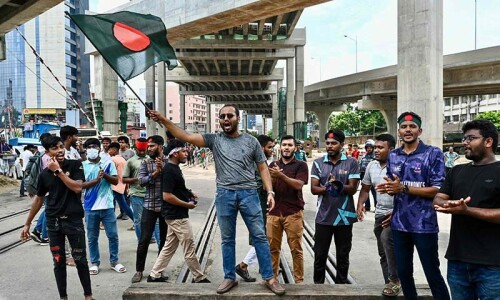
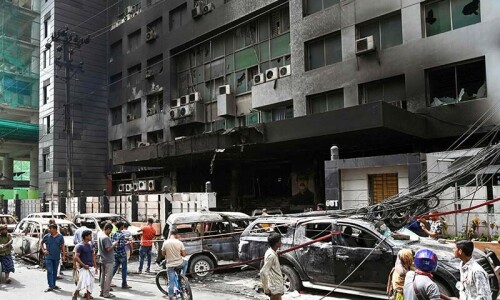
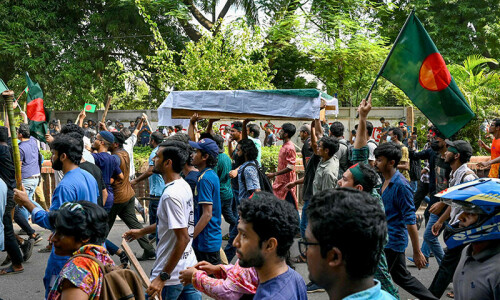
CHAOS has engulfed Dhaka, as well as other parts of Bangladesh, over the past few days. Anti-government protests had been gaining momentum for several weeks, yet popular outrage exploded after several demonstrators were killed in confrontations with security forces and government supporters. Educational institutions have been shut, many media outlets are off air, while a widespread internet blackout has been reported from the country. According to one count, around 40 people have died in the violence, while hundreds are injured.
Students have been at the forefront of the protests. Many young people took to the streets after a court reinstated quotas for the children and grandchildren of ‘freedom fighters’ — those who participated in the creation of Bangladesh in 1971 — in government jobs. Public sector employment is a popular option for many in Bangladesh, yet nearly half the jobs are reserved under various quotas. With the economy stagnating and millions of Bangladeshis out of work, the court decision has unleashed much pent-up anger. The situation remained tense on Friday, with sporadic protests reported from the country.
The demonstrations over job quotas cannot be seen in isolation, as an economic slowdown, as well as a sense of political disenfranchisement, has created an explosive situation in Bangladesh. Prime Minister Shaikh Hasina Wajed secured a record fourth term in elections held earlier this year. Boycotted by the opposition, they had raised questions of legitimacy. Earlier, Shaikh Hasina had overseen a crackdown against opposition forces, including the Bangladesh Nationalist Party.
In such a politically polarised atmosphere, with economic growth not meeting the expectations of many Bangladeshis, such mass protests were only a matter of time. Thousands of garment workers had also taken to the streets last year demanding higher wages. The Bangladesh government should deal with the situation carefully lest the protests spiral out of control. The demonstrators’ legitimate demands should be met, while the deaths of protesters should be investigated in a transparent manner.
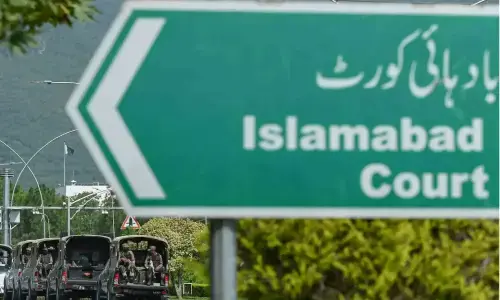
Moreover, the unfortunate events playing out in Bangladesh should serve as a warning sign for other South Asian states. Political victimisation coupled with economic stagnation and heavy-handed state reaction is a recipe for disaster. All political forces should be allowed to freely operate as per democratic norms, while the state needs to act with compassion and transparency in times of economic distress.
Published in Dawn, July 20th, 2024