• Heavy rains wreak havoc in Balochistan; hundreds of families rendered homeless
• Quetta-Chaman highway washed away at multiple points
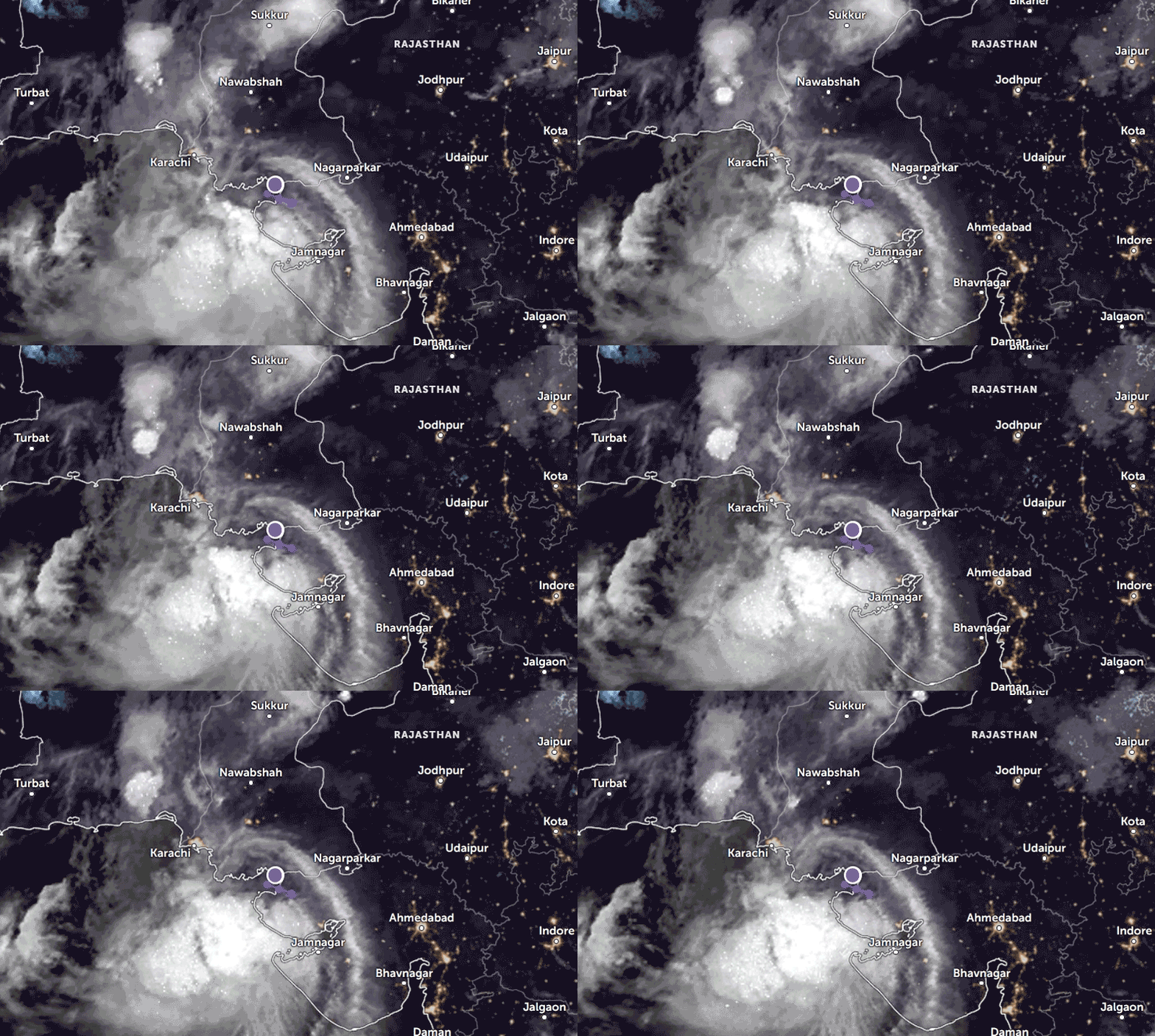
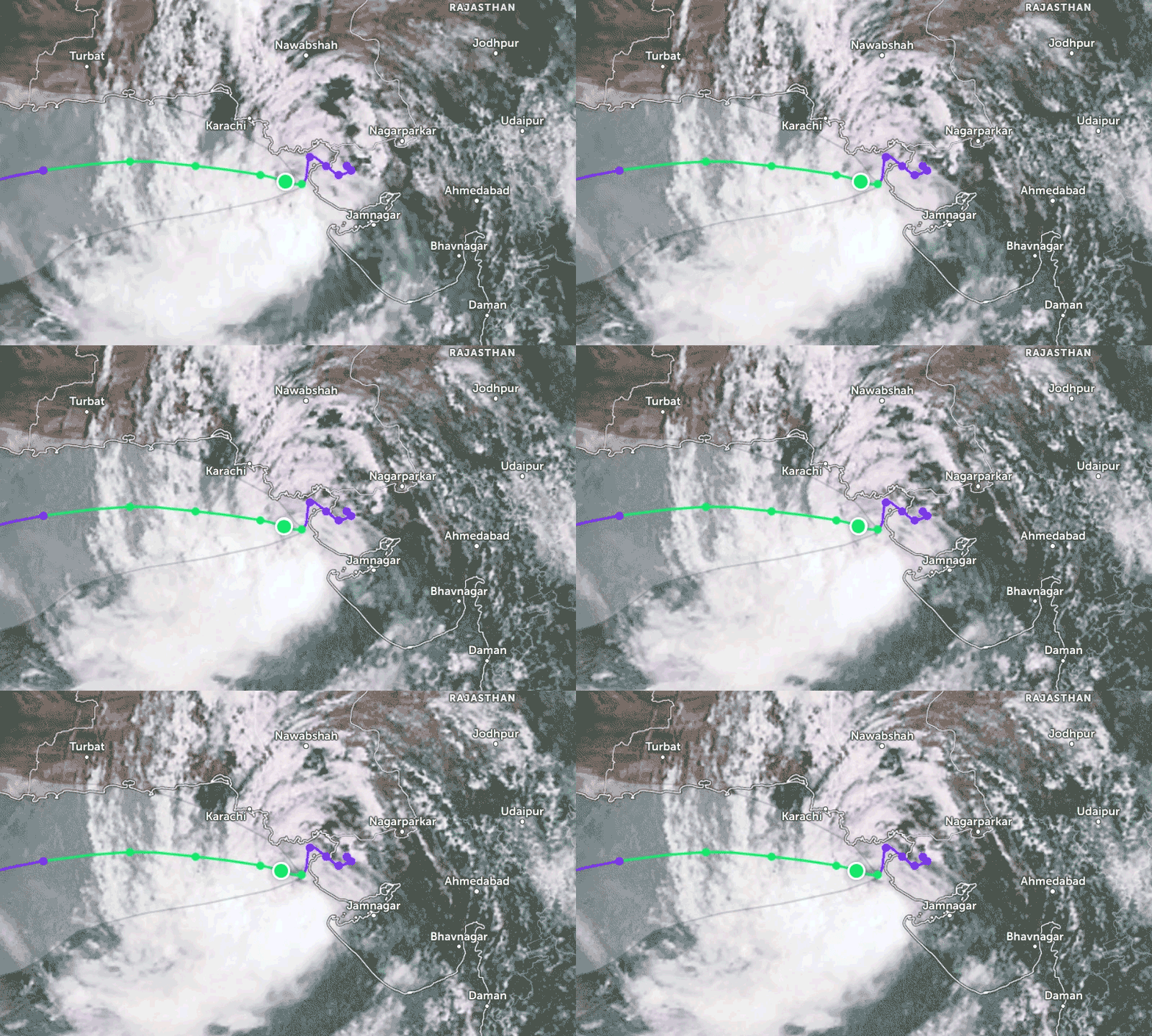
KARACHI / QUETTA: Although Sindh has largely moved out of Cyclone Asna’s influence, Balochistan may still experience thundershowers with heavy downpours along its coastal areas until Sunday night, according to a senior official at the Pakistan Meteorological Department (PMD).
“The cyclone is moving away from both Sindh and Balochistan, though the latter’s coastal parts are likely to experience rain-thundershowers with a few heavy falls till Asna dissipates at sea tomorrow night (Sunday) before reaching Oman,” Chief Meteorologist Dr Sardar Sarfaraz told Dawn.
It’s the same system that brought about heavy downpour in Balochistan from Aug 26 onwards and later turned into a cyclone.
“At that time, it prevailed over east Rajasthan, India, in the form of a low pressure area, sending strong monsoon currents over Balochistan where the conditions became critical due to flash floods and poor infrastructure,” Mr Sarfaraz said.
Regarding media reports of another low-pressure developing over the Bay of Bengal, he said a weather system goes through multiple stages of intensity before becoming a cyclone, and it’s too early to comment on this specific system at present.
According to a PMD advisory released on Saturday night, cyclonic storm Asna over central Arabian Sea continued to move further westward and lies at a distance of about 370km southwest of Karachi, 250km southwest of Ormara and 260km south-southeast of Gwadar.
The system is likely to track further westwards till Sunday, then turn southwestward and weaken gradually.
“Under its influence, rain-thundershowers with a few heavy falls and accompanied with squally winds (60-70Km/hour) are likely in Hub, Lasbella, Awaran, Ormara, Pasni, Gwadar, Jiwani, Turbat, Panjgur, and surrounding areas till Sunday night.
“Heavy rains may create water logging in low-lying areas of Makran coast. Sea conditions are likely to remain rough/very rough with squally winds of 60-70km/hour gusting 80km/hour till Sept 1.
“Fishermen of Balochistan are advised not to venture in open sea till the night of Sept 1 while those of Sindh can resume activities from tomorrow,” the PMD advisory said.
Massive destruction
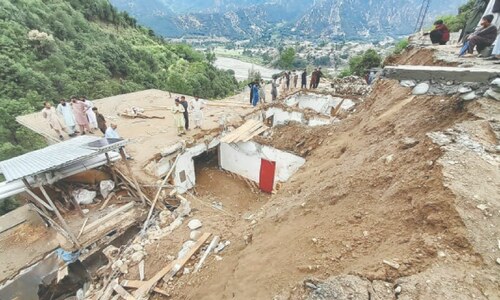
Heavy monsoon rains and flash floods continued to wreak havoc in Balochistan on Saturday, causing massive destruction of road infrastructure, leaving hundreds of families homeless as numerous mud houses collapsed in various areas of the province.
The Afghan transit trade was suspended after the Quetta-Chaman highway was washed away at multiple points.
Officials said the mountainous area of Khojak Pass, connecting Quetta with Chaman and Kandahar, received the heaviest rainfall, causing severe damage to the historical Shella Bagh tunnel. The tunnel was filled with mud after a mudslide in the area, rendering it impassable. Consequently, the train service between Quetta and Chaman has been suspended, as the 4.5km long railway tunnel is buried under approximately five feet of mud.
“Train services cannot be restored immediately,” officials told Dawn, adding that cleaning the mud from the tunnel will be a time-consuming process. The Shella Bagh railway station was also badly affected by the flash flood.
According to reports, heavy rain began in the Khojak mountains last night and continued until Saturday morning, causing parts of N-25 to be washed away, suspending traffic between Quetta and Chaman and disrupting Afghan transit trade via the highway and rail.
A large number of trucks carrying transit goods and other items bound for Chaman and Kandahar were stranded between Qila Abdullah and Chaman. In light of the flood situation and destruction, the district administration has declared a flood emergency across the entire Chaman district.
The flash flood also badly hit many areas of Qila Abdullah, where a large number of mud houses were swept away, leaving people homeless. According to officials, a village in the Qila Saifullah area was completely destroyed, and dozens of families were displaced after their houses were washed away in the heavy floodwaters, which resulted from several hours of continuous heavy rainfall.
The Qila Saifullah deputy commissioner said the families had been shifted to safe places as Levies and local administration started rescue operation soon after receiving information about the destruction.
According to reports, Jhal Magsi in Nasirabad division was severely affected, with vast areas submerged in floodwater and many villages cut off from the district headquarters. Hundreds of families were marooned as the River Mola was overflowing with floodwaters, fuelled by heavy rains in the catchment area of the river in Khuzdar.
“Given the dire situation, the PDMA has dispatched boats to rescue people stranded in various villages,” said Aurangzeb Khan, head of PDMA Balochistan, adding that they are also sending tents and other relief goods to Jhal Magsi to evacuate families trapped in the floodwater.
According to officials, 13 people were swept away in flash floods that hit Loralai, Qila Saifullah, Duki, Harnai, and Jhal Magsi areas of Balochistan. In Loralai, seven family members were trapped in floodwater, but rescue workers and Levies personnel rescued them after a five-hour effort. PDMA officials said Bolan, Nari Gaj, Lehri, and Mola rivers, as well as other seasonal streams, were carrying heavy floodwater.
According to irrigation officials, 84,000 cusecs of floodwater was passing through the Nari Gaj River in the Sibi area, while 11,000 cusecs were recorded in the Bolan River at Pingra Bridge.
“All rivers and seasonal streams are in high flood,” a senior irrigation department official told Dawn, adding that the Mushkaf and Sani rivers were also carrying 6,000 cusecs of floodwater each.
Published in Dawn, September 1st, 2024