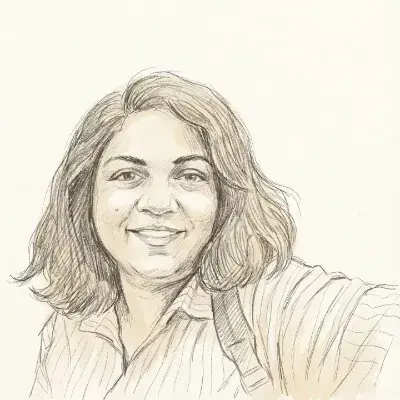
KARACHI: The controversial figure of Indian activist Vinayak Damodar Savarkar came into light as academic Janaki Bakhle, a history professor at University of California, Berkeley, spoke about the writing of her second book, Savarkar and the Making of Hindutva, at the Institute of Business Administration’s (IBA) City Campus here on Tuesday.
“Savarkar (1883 to 1966) was the author of what is mistakenly called ‘Hindu fundamentalism’. An ideology like this just does not spring out of nowhere. It has a long gestation period,” Prof Bakhle said.
“To understand it you need to go back 100 years or so. So for my next book I intended to write a quick biography of Savarkar. She added that Savarkar grew up in Maharashtra. For most of his life he lived in Nashik, Pune, Mumbai and Ratnagiri. Muslims were not absent but they were in the distant minority compared to what he might have encountered had he lived in Punjab, Bengal or in South India, near Hyderabad.
UC Berkeley professor Janaki Bakhle sheds light on controversial Indian politician Vinayak Savarkar
“And yet for reasons that have to do with a particular take on regional history, he was particularly anti-Muslim. So one of the first things that emerged when I was writing this book was that my focal point just immediately stopped being this kind of all Indian national focus when everything was refracted out of Delhi. It shifted to the region, the locality, the area where he grew up,” she said.
“Now in India, then and now, there were two key political issues that marked people on one or the other side of the nationalist centre, loosely speaking represented by, shall we say, Gandhi or Nehru. To Gandhi’s left would have been the Communist party founded in Tashkent in the 1920s, which took most of its queues from the Russians, and to his right would be Savarkar, who would hold Gandhi in contempt for, among other things, indulging Muslims,” she explained.
“Savarkar formed a secret society in the 1900s. In 1902 he went to Pune to join college. In 1904, he formed another revolutionary organisation. In 1905, he organised the first bonfire of foreign cloth in Pune. He also finished his Bachelor’s degree. His entire trajectory in college is that of a student revolutionary, who is under surveillance. For that matter, he was under surveillance for pretty much his entire adult life.”
“What that meant in terms of writing the book for me was that a great deal of what he wrote was in code. It was encoded for other people, other revolutionaries. I had to figure out how to decode a great deal of what he wrote,” said the professor.
“Despite the fact that there was not a large Muslim population in Maharashtra, Savarkar had a very firm conception of who Muslims were. In the standard literature on Savarkar, the line is that he was absolutely fine, he had many Muslim friends before he goes to some islands where he meets some fanatical Muslims, which changes his mind.”
“In the course of doing research for my book I found this completely inadequate. Still, he felt that Muslims were genetically untrustworthy, they were fanatical, they were rapacious ... In many ways, Savarkar mimics what the British also said about the Muslims, particularly after 1857. So how could he actually pull off all this anti-Muslim rhetoric? Well, he had an alibi, a Brahmin progressivism, one of the ways in which this ideology of Hindutva consolidates its power. It looks to the future and is progressive on a great many issues that bedevil India,” she said.
“It is progressive on the subject of gender, it is progressive on the subject of caste, it is simply not progressive on the subject of Muslims. That alibi then allows people, scholars as well, to look at Savarkar very partially. They can just look at his poetry or they can just look at his caste progressivism and ignore everything else,” she said, adding that she only found the real Savarkar for her book by coming upon a bifurcated world about him in the Marathi language. “Strangely, all who have written about Savarkar have not cared to go through his own writings in Marathi in order to understand him,” Prof Bakhle concluded.
Published in Dawn, January 8th, 2025